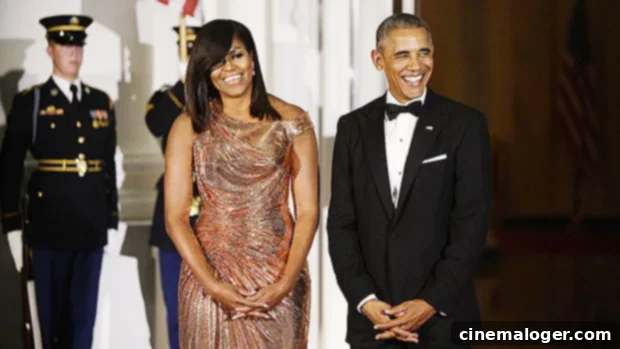
Barack Obama Addresses Michelle’s Candid Revelation: How Their Marriage Evolved Beyond the White House
Former President Barack Obama recently offered a thoughtful perspective on his wife Michelle Obama’s widely discussed comments regarding challenging periods in their marriage. Michelle, the former First Lady, had candidly shared that there were “10 years” during which she “couldn’t stand” her husband, specifically when their two daughters, Malia and Sasha, were young and demanding. Barack Obama, now 61, spoke to CBS Mornings’ Nate Burleson, acknowledging the significant impact of their post-White House life on their personal relationship. His remarks provide a rare glimpse into the private struggles and triumphs of one of the world’s most public couples, resonating with many who navigate the complexities of long-term commitment and family life.
For Barack Obama, the solution to their marital strains post-presidency was remarkably simple: more time together, free from the relentless spotlight and unprecedented demands of the highest office in the land. “Let me just say this: it sure helps to be out of the White House. And to have a little more time with her,” he stated. This straightforward observation underscores the immense pressure that their eight years in the White House placed on their family dynamic, a pressure that few can truly comprehend. Stepping away from the political arena allowed them the space and privacy to reconnect, to rediscover the rhythm of their ordinary life, and to prioritize their relationship in a way that was nearly impossible while serving the nation and raising a young family.
The Unique Pressures of Parenthood and Public Service
Beyond the benefit of increased leisure time, Barack Obama also emphasized the transformative impact of their daughters growing into adulthood. Malia, now 24, and Sasha, 21, are independent young women, alleviating much of the intensive parenting responsibilities that once consumed Michelle Obama’s energy and attention. “Michelle — when our girls were growing up, that was priority number one, two, three and four,” he explained. This prioritization meant that Michelle bore the brunt of daily parenting, managing school schedules, extracurricular activities, and the emotional well-being of their children, all while under intense public scrutiny as the First Lady and supporting her husband’s presidency.
Barack acknowledged that, despite being an engaged father himself, he did not fully grasp the emotional toll this period took on Michelle. “And so, I did not fully appreciate, I think, as engaged of a father as I was, the degree of stress and tension for her, knowing that not just me and Michelle were under scrutiny and in this strange environment, but that we were raising our daughters in a kind of situation that just wasn’t normal,” he admitted. This honest reflection highlights a common challenge in many partnerships: a differing perception of the workload and emotional labor involved in raising a family, particularly when one parent takes on a primary caregiver role amidst extraordinary circumstances. The weight of guiding children through adolescence while under the global microscope placed immense strain on their family unit.
The former President further shared how their changed family dynamic has brought a new level of understanding and empathy into their relationship. “Now that they’re doing good, she is a little more forgiving of all my flaws,” he quipped, revealing a lighter side to their enduring partnership. He added, “What she’s told me is, you know, ‘Looking back, you did okay as a dad.’ And if I passed that test, then she’ll forgive me most of my other foibles.” This anecdote not only illustrates Michelle’s evolving perspective but also speaks to the importance of recognizing and appreciating a partner’s efforts, especially retrospectively, after the most demanding phases of life have passed. It’s a testament to the growth, understanding, and forgiveness that are often essential ingredients in a strong, long-lasting marriage.
Michelle Obama’s Candid Confession: “I Couldn’t Stand My Husband”
Barack Obama’s recent comments were prompted by Michelle’s own groundbreaking interview with Revolt, where she spoke with remarkable openness about the challenges within her marriage. Her admission that there were approximately “10 years” when she “couldn’t stand” her husband sent ripples across social media and sparked widespread discussion about the realities of long-term relationships. Michelle pinpointed this difficult period to when their daughters, Malia and Sasha, were very young, a phase familiar to countless parents grappling with the immense responsibilities of raising children while simultaneously building careers and maintaining a partnership.
“People think I’m being catty by saying this — it’s like, there were 10 years where I couldn’t stand my husband. And guess when it happened? When those kids were little,” she stated unequivocally in the 2022 interview. This period, characterized by sleepless nights, constant demands, and the logistical nightmare of managing two young lives, can undeniably test the strongest of bonds. For the Obamas, this was compounded by Barack’s burgeoning political career, which often meant long hours and frequent travel, leaving Michelle to shoulder much of the domestic and parenting burden. It was a time of immense growth and challenge, both individually and as a couple, as they juggled personal aspirations with family obligations.
Michelle elaborated on the dual pressures they faced: “And for 10 years while we’re trying to build our careers and, you know, worrying about school and who’s doing what and what, I was like, ‘Ugh, this isn’t even.’” Her words paint a vivid picture of the relentless juggle that many modern couples face – balancing professional aspirations with the all-consuming duties of parenthood. The feeling of being overwhelmed, of resentment bubbling beneath the surface, and the sense that the partnership is no longer a source of mutual support but rather another demanding obligation, are experiences that resonate deeply with many individuals struggling to find balance in their own lives.
The Unconventional Math of a Long-Lasting Marriage: Beyond 50/50
Perhaps one of Michelle Obama’s most profound insights from the interview was her assertion about the nature of partnership itself: “And guess what? Marriage isn’t 50/50, ever, ever.” This statement challenges the popular ideal of an evenly split, perfectly balanced relationship, offering instead a more realistic and nuanced understanding. She explained, “There are times I’m 70, he’s 30. There are times he’s 60, 40, but guess what? Ten years — we’ve been married 30.” Her philosophy suggests that successful, enduring marriages are not about maintaining a constant equilibrium but rather about a dynamic ebb and flow, where partners step up when the other needs support, and responsibilities shift based on life’s ever-changing demands and individual capacities.
This perspective offers a powerful counter-narrative to the societal pressure that often leads couples to give up on their relationships when they inevitably encounter imbalance. Michelle’s practical approach advocates for resilience and a long-term vision. She explicitly stated, “I would take 10 bad years over 30 — it’s just how you look at it. And people give up … ‘Five years; I can’t take it.'” Her words serve as a powerful reminder that tough times are an inherent part of any long-term commitment, and that patience, perseverance, and a willingness to ride out the storm are crucial for reaching the lasting rewards of a deep partnership. This mindset encourages a re-evaluation of expectations, promoting the idea that enduring love often requires navigating periods of dissatisfaction for the sake of a greater, long-term bond.
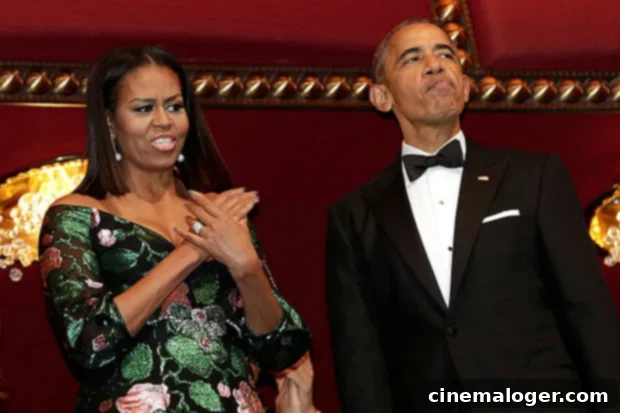
The Enduring Journey of Barack and Michelle Obama
The story of Barack and Michelle Obama’s relationship is a testament to growth, adaptation, and unwavering commitment. Their journey began in 1989 when they first met at a law firm in Chicago, leading to their marriage in 1992. Their family grew with the arrival of their first daughter, Malia, in 1998, followed by Sasha in 2001. These were indeed the formative years Michelle referred to as particularly challenging, a period where they were not only nurturing their young family but also navigating the early stages of Barack’s political ascent, moving from local politics to the U.S. Senate.
From 2009 to 2017, the couple served as the U.S. President and First Lady, an eight-year tenure that placed extraordinary demands on their marriage and family life. Every decision, every interaction, and every personal moment was subject to unprecedented public scrutiny, adding layers of complexity to the already arduous task of raising children and maintaining a partnership. Yet, through it all, they presented a united front, embodying grace, strength, and mutual respect, becoming a symbol of enduring partnership for many across the globe.
Their recent candidness about their marital challenges offers valuable lessons for couples everywhere. It demystifies the idea of a perfect relationship, instead presenting a more authentic and relatable narrative of enduring love. By openly discussing the difficult periods and the strategies they employed to overcome them – from gaining more time together post-White House to adopting a realistic “non-50/50” approach to partnership – the Obamas continue to serve as role models, not just in public service, but also in the intensely personal realm of marriage and family. Their story reinforces the notion that true love is not about never facing difficulties, but about facing them together, learning from them, and ultimately emerging stronger on the other side, richer in experience and deeper in connection.
In conclusion, both Barack and Michelle Obama’s reflections underscore a universal truth: that marriage is a dynamic, evolving entity, continuously shaped by life’s changing circumstances, challenges, and joys. Their honesty encourages a healthier dialogue around relationship struggles, reminding us that even the most admired couples navigate their own “hard times,” and that perseverance, understanding, and adaptability are key to a lasting and fulfilling partnership. Their openness provides comfort and guidance, affirming that commitment through adversity is indeed possible and immensely rewarding.