Adil Osmanov’s Olympic Bronze: A Celebration Cut Short by Unexpected Injury at Paris 2024 Judo
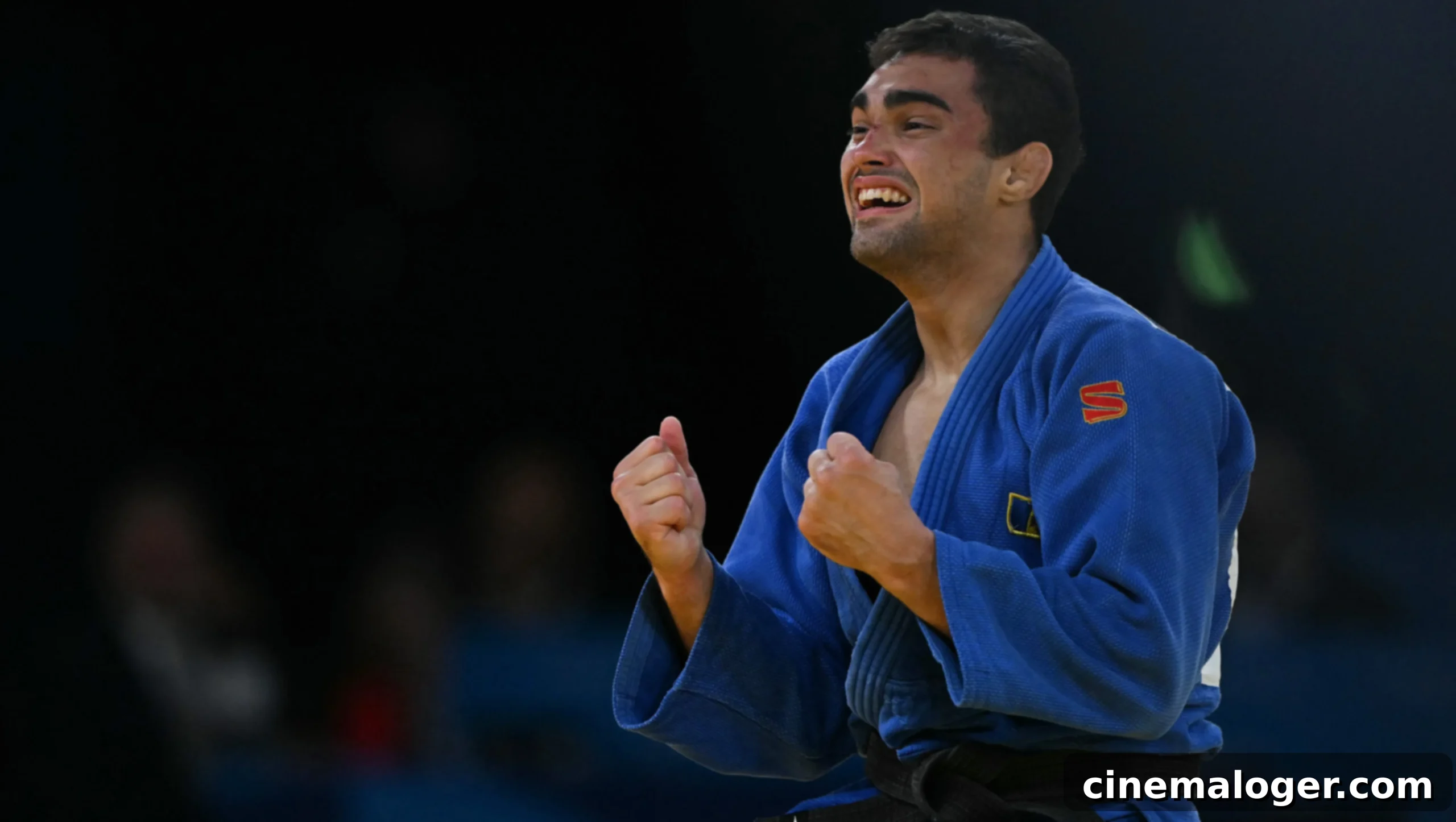
In a heart-stopping moment that captured the bittersweet essence of Olympic triumph, Moldovan judoka Adil Osmanov experienced both the pinnacle of his athletic career and a sudden, excruciating setback. Just seconds after securing a bronze medal in the Judo 73 kg category at the Paris 2024 Olympic Games, Osmanov’s celebratory leap unfortunately led to a severe shoulder dislocation, transforming his jubilant moment into one of visible pain. This unexpected turn of events quickly became one of the most talked-about incidents of the Games, highlighting the extreme physical demands and emotional rollercoasters faced by elite athletes.
On Monday, July 29, the 24-year-old athlete had just concluded a grueling match against Italy’s Manuel Lombardo, emerging victorious and earning a coveted spot on the Olympic podium. The bronze medal was not merely a personal achievement but a significant moment of pride for Moldova, marking one of its earliest successes at the highly anticipated Paris Games. As the final whistle blew and his victory was confirmed, Osmanov’s natural reaction was an explosion of joy, an instinct shared by countless athletes who dedicate years of their lives to reach this stage. However, in a cruel twist of fate, one of his energetic celebratory movements resulted in his shoulder popping out of its socket.
The Unforgettable Moment of Triumph and Unexpected Pain
The scene unfolded rapidly. After the intense physical and mental exertion of the bronze medal match, Osmanov’s relief and elation were palpable. He had battled fiercely, demonstrating remarkable skill and determination to overcome his opponent. The roar of the crowd, the flashing cameras, and the culmination of a lifelong dream all contributed to an overwhelming surge of emotion. In his exuberance, he celebrated with vigor, unaware of the impending misfortune. Eyewitnesses and television replays showed him clutching his shoulder almost immediately, his face contorting in pain as he collapsed onto the mat. The stark contrast between his initial joy and subsequent agony was jarring, leaving spectators and commentators in stunned disbelief.
The injury, a dislocated shoulder, is a common occurrence in contact sports like judo, but its timing made it particularly poignant. It served as a stark reminder of the fragile line between peak performance and physical vulnerability that athletes constantly tread. The immediate medical attention he received underscored the seriousness of the injury, yet amidst the pain, Osmanov’s resilience was already evident. He was clearly devastated, not just by the physical discomfort but by the sudden disruption to his glorious moment.
Judista Adil Osmanov si vyhodil rameno při oslavě zisku bronzové medaile! 😅🥉 pic.twitter.com/KGW3mczYT
— Sportovní Hlášky (@SportovniHlasky) July 29, 2024
Overcoming Adversity: A Champion’s Resilience and Pre-Existing Challenges
As details emerged following the incident, it became clear that Osmanov’s path to the Olympic podium was already fraught with significant challenges. Speaking to reporters, as reported by Metro UK, he revealed that he had been suffering from an illness leading up to the competition. Furthermore, doctors had advised him to undergo surgery on his shoulder even before the Olympics, suggesting a pre-existing vulnerability that likely contributed to the dislocation. This revelation added another layer of admiration for his achievement, highlighting the immense courage and tenacity required to compete at such a high level while battling personal health issues.
Reflecting on the difficulties, Osmanov stated, “Yes, it was very difficult. And during the warm-up, I felt bad, but I’ve had that before – and that’s when I got a medal. I had no options to back down.” These words encapsulate the unyielding spirit of an Olympian. They underscore the mental fortitude required to push past physical discomfort and the immense pressure to perform on the world’s biggest stage. For Osmanov, backing down was simply not an option, especially with a medal within reach, despite his body’s protests. His decision to push through illness and a compromised shoulder speaks volumes about his dedication and competitive drive.
Sincerest congratulations to our compatriots Hidayat Heydarov representing #Azerbaijan & Adil Osmanov representing #Moldova with their win of gold & bronze medal at #ParisOlympicGames2024 pic.twitter.com/yuZ17iOn5Z
— Azembassy in Moldova (@AzembassyM) July 30, 2024
A Podium Finish Despite the Setback: The Medal Ceremony
Despite the excruciating pain and the immediate medical attention, Osmanov demonstrated incredible grit by managing to recover sufficiently to attend the medal ceremony. This appearance was a testament to his determination not to let the injury completely overshadow his achievement. He stood proudly on the podium, his bronze medal around his neck, alongside gold medallist Hidayat Heydarov of Azerbaijan and silver medallist Joan-Benjamin Gaba of France. The image of him on the podium, perhaps still wincing, yet beaming with pride, perfectly encapsulated the highs and lows of the Olympic journey. It was a powerful statement that while physical pain might temporarily mar the moment, the spirit of accomplishment and the honor of representing one’s nation ultimately prevail.
A Medal Dedicated: Fulfilling a Father’s Dream
Adil Osmanov’s journey to Olympic glory is deeply intertwined with his family’s sporting heritage and a poignant dedication to his late father. According to the official Olympics website, it was his father who first encouraged him to take up judo. This mentorship stemmed from a rich family history in athletics: “I have a sports family. My father was engaged in sambo (a martial art with Soviet origins), my mother in athletics, and my brother and sister are also engaged in judo,” Osmanov explained in May.
The bronze medal held an even deeper personal significance for Osmanov. He dedicated his achievement to his late father, revealing a touching family narrative: “He dreamed of reaching the Olympics himself. He did not succeed due to financial impossibility. He dreamed that one of his children would reach the Olympics and get a medal.” This dedication transforms Osmanov’s medal from a personal victory into a fulfillment of a generational dream. It speaks to the sacrifices made by families, the legacy passed down through generations, and the enduring power of dreams, even those unrealized by previous generations.
National Pride: Moldova Celebrates Its Hero
Adil Osmanov’s bronze medal sparked an outpouring of national pride and congratulations from Moldova’s highest officials. Moldovan President Maia Sandu was among the first to extend her felicitations to the young athlete. “Another bronze medal for Moldova!” she wrote in an enthusiastic post on X, accompanied by a photo of Osmanov after his triumphant performance. “Congratulations to our judoist Adil Osmanov for the impressive performance at the Olympics. Your achievement is a victory for us all!” Her words reflected the collective joy and sense of accomplishment felt across the nation, emphasizing the unifying power of sports.
Echoing these sentiments, Igor Grosu, the Speaker of the Moldovan Parliament, also issued a statement, as reported by The Standard, highlighting the country’s exceptional showing in judo. “Our sportspeople in judo show extraordinary performances at the Paris Olympic Games. The second bronze medal for Moldova, at judo,” Grosu reportedly stated. “Excellent, Adil Osmanov. Your work and perseverance brought us pride and happiness. Come on, Moldova.” These messages from national leaders underscore the profound impact of Olympic success, not only on the individual athlete but also on the national psyche, fostering a sense of unity and shared identity.
The Deeper Meaning of Olympic Spirit: Resilience in the Face of the Unexpected
Adil Osmanov’s extraordinary Olympic journey – from battling pre-existing conditions and illness to triumphing with a bronze medal, only to suffer an injury during celebration – encapsulates the multifaceted nature of the Olympic spirit. It’s a spirit defined not just by athletic prowess and the pursuit of medals, but by resilience, perseverance, and the ability to confront unforeseen challenges with unwavering resolve. His story is a powerful narrative about pushing physical and mental boundaries, reminding us that the path to glory is rarely smooth.
The Physical and Mental Gauntlet of Elite Sports
The incident also serves as a poignant reminder of the incredible physical demands placed on Olympic athletes. Years of intensive training, rigorous diets, and relentless competition push the human body to its absolute limits. While athletes strive for peak performance, the risk of injury is an ever-present reality, often occurring in the most unexpected moments. Osmanov’s shoulder dislocation, coming during a moment of pure joy, highlights the unpredictable nature of elite sports and the fine line athletes walk between ultimate success and physical vulnerability. His ability to recover and stand on the podium speaks volumes about the dedication of medical teams and the sheer willpower of the athletes themselves.
Beyond the Podium: The Human Story
Ultimately, Adil Osmanov’s bronze medal moment transcends the mere sporting achievement. It is a deeply human story of overcoming adversity, honoring family legacy, and inspiring a nation. His openness about his struggles – the illness, the prior shoulder issues, and the dedication to his late father – allows the public to connect with him on a more personal level. It reinforces the idea that behind every medal and every record, there is an individual with a unique journey, filled with personal battles, dreams, and profound emotional connections.
Conclusion: Adil Osmanov’s Enduring Legacy
Adil Osmanov’s bronze medal at the Paris 2024 Olympic Games will undoubtedly be remembered for more than just the color of the metal. It will be remembered as a symbol of remarkable resilience, a testament to the indomitable Olympic spirit, and a poignant reminder that even in moments of ultimate triumph, life can present unexpected challenges. His ability to overcome illness, a compromised shoulder, and the immediate pain of an injury during celebration to still stand tall on the podium is an inspiration. More profoundly, his dedication of the medal to his late father imbues his achievement with a timeless emotional resonance, ensuring that Adil Osmanov’s journey will be celebrated not just for its athletic brilliance, but for its profound human spirit and the fulfillment of a cherished family dream.