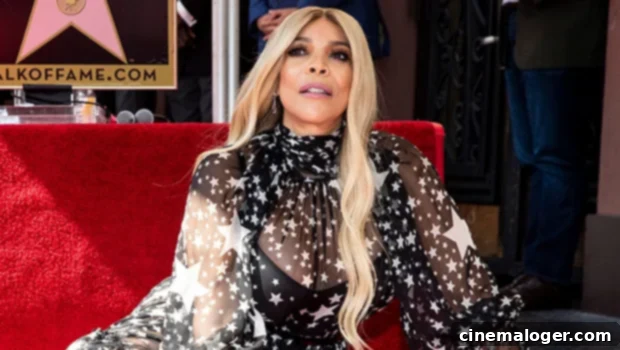
Wendy Williams Sparks Outcry: Controversial LGBTQ+ Comments Ignite Social Media Firestorm
Television personality Wendy Williams, renowned for her candid “Hot Topics” segment and no-holds-barred commentary, found herself at the center of a significant controversy following a series of remarks made on her eponymous daytime talk show. The veteran host, often celebrated for her authenticity, faced a severe backlash from viewers and the LGBTQ+ community after making what many deemed insensitive and exclusionary comments directed at gay men. This incident, which unfolded during a segment discussing Galentine’s Day, not only sparked widespread condemnation but also prompted a broader conversation about inclusivity, gender identity, and the responsibilities of public figures in mainstream media.
The controversy ignited during the February 13 episode of The Wendy Williams Show, a platform known for its often unfiltered discussions on pop culture and celebrity gossip. As Williams, 55, delved into her popular “Hot Topics” segment, the conversation turned to Galentine’s Day. This unofficial holiday, popularized by the sitcom Parks & Recreation, is typically celebrated on February 13th, focusing on women celebrating their female friendships. While discussing the celebration, Williams noticed some men in her studio audience applauding, which seemingly prompted her contentious remarks.
Her initial comments, though perhaps intended as lighthearted quips, quickly turned problematic. Addressing the men in the audience, Williams stated, “If you’re a man and you’re clapping, you’re not even a part of this. You don’t understand the rules of the day. It’s women going out and getting saucy and then going home. You’re not a part.” This initial exclusion, while aimed at men generally, set the stage for more pointed comments that specifically targeted gay men, further alienating a significant portion of her audience and the wider LGBTQ+ community who felt directly disrespected.
The situation escalated significantly when Williams made a series of remarks that directly addressed the experiences and identities of gay men. She continued, “I don’t care if you’re gay. You don’t get a [menstruation] every 28 days.” This comment, attempting to draw a biological distinction between cisgender women and gay men, was immediately criticized for its reductive nature and its implication that shared biological experiences are the sole determinant of one’s ability to understand or participate in discussions about womanhood. Critics argued that this perspective not only dismisses the diversity within the LGBTQ+ community but also ignores the emotional and social understanding that individuals can develop regardless of their biological sex or sexual orientation.
Williams wasn’t finished, adding further fuel to the fire with another set of comments that touched on gender expression. “You can do a lot that we do, but I get offended by the idea that we go through something you will never go through. And stop wearing our skirts and our heels. Just saying, girls, what do we have for ourselves?” This admonition against gay men wearing “skirts and heels” struck many as particularly jarring. It not only reinforced harmful gender stereotypes but also seemed to police the fashion choices and self-expression of gay men, many of whom use clothing and style as a crucial component of their identity and artistic expression. The comments were widely interpreted as an attempt to gatekeep womanhood and femininity, ironically from a show that often champions individual expression.
The immediate aftermath on social media was swift and overwhelmingly negative. Viewers and online commentators wasted no time in condemning Williams’ remarks, expressing a mix of anger, disappointment, and disbelief. Hashtags related to Wendy Williams and her comments began trending, filled with thousands of tweets and posts from individuals sharing their outrage. One Twitter user succinctly captured the sentiment, tweeting, “Really? What sort of ignorance is coming out of your mouth regarding gay men wanting to be women!! Really Wendy?” This highlighted the perceived misunderstanding and dismissiveness in Williams’ statements.
Many critics pointed out what they perceived as stark hypocrisy, drawing parallels between Williams’ recent emotional response to other LGBTQ+-related news and her current controversial stance. Just one day prior to these comments, Williams had teared up on her show while discussing the immense support Dwyane Wade, 38, and Gabrielle Union, 47, showed for their then 12-year-old transgender daughter, Zaya Wade, who had recently come out. Williams had praised the couple’s unconditional love and acceptance, making her subsequent remarks about gay men all the more perplexing and infuriating to her audience.
This apparent contradiction was a recurring theme in the online backlash. Another tweet summarized the frustration: “She’s trying to cancel herself. A day after crying about Zaya, she says gay men need to stop wearing heels and skirts and then to bring up that they’ll never have a cycle is just disgusting, especially after yesterday’s show.” This sentiment underscored the deep disappointment felt by many who had viewed Williams as an ally or, at the very least, a neutral observer in matters of LGBTQ+ rights and acceptance. The timing of the comments, coming so soon after a moment of empathy, amplified the perceived insensitivity and disconnect.
Wendy Williams, DAMN! She’s trying to cancel herself. A day after crying about Zaya, she says gay men need to stop wearing heels and skirts and then to bring up that they’ll never have a cycle is just disgusting, especially after yesterday’s show.
— Marcus Little (@MarcusUntrell92) February 13, 2020
Despite the immediate and widespread condemnation, Wendy Williams doubled down on her comments later in the same show. Known for her defiant personality and tendency to stand by her remarks, she offered a self-aware but unapologetic explanation. “I tell you every day, and I mean this and I’m going to keep drilling it in your mind: It is so scary coming out here and sitting here by myself with my loose mouth and my slick humor,” she stated. “And, you know, I’m by myself. I can’t blame anybody but me. I say it and I mean it.”
This defense, while acknowledging her unfiltered nature, did little to quell the storm. For many, it felt less like an apology or a clarification and more like a reinforcement of her stance, emphasizing her individual responsibility without fully addressing the harm caused by her words. Her “loose mouth” explanation, a hallmark of her brand, was seen by critics as insufficient given the gravity of the topics she touched upon, particularly regarding marginalized communities. The incident highlighted the fine line between authentic, unfiltered commentary and comments that cross into offensive territory, especially for a public figure with a wide-reaching platform.
The controversy surrounding Wendy Williams’ comments serves as a stark reminder of the evolving landscape of public discourse and the heightened expectations placed on celebrities regarding social sensitivity. In an era where discussions around gender identity, sexual orientation, and inclusivity are becoming increasingly prevalent and nuanced, figures like Williams face immense scrutiny for their words. While her show thrives on controversy and her unique brand of “Hot Topics,” this particular incident raised serious questions about her understanding and respect for the diverse communities within her fanbase, including the significant LGBTQ+ following she cultivates.
Ultimately, this episode became more than just a fleeting moment of controversy; it became a case study in the power of words, the impact of celebrity influence, and the ongoing struggle for true inclusivity in entertainment and beyond. The incident underscored that even well-established personalities are not immune to critical feedback and that the audience, particularly marginalized groups, will hold them accountable for remarks that are perceived as dismissive, ignorant, or harmful. For Wendy Williams, it was a moment that undeniably tested the loyalty of her audience and prompted many to reconsider their relationship with a show known for its irreverent, yet sometimes deeply divisive, commentary.