Taylor Swift’s NYC Loft Security Thwarts Disoriented Intruder Attempt: A Deep Dive into Celebrity Safety Challenges
The sanctuary of home, a place of peace and privacy, is often a luxury that eludes global superstars. On May 10, superstar Taylor Swift experienced this unsettling reality firsthand when her Tribeca loft in New York City became the target of an unwelcome and potentially dangerous visitor. Fortunately, her highly trained security team acted swiftly and decisively, preventing any breach of her personal space and averting a potentially terrifying confrontation for the 26-year-old pop icon. This incident serves as a stark reminder of the persistent security challenges faced by high-profile celebrities and the crucial role played by their dedicated protection detail.
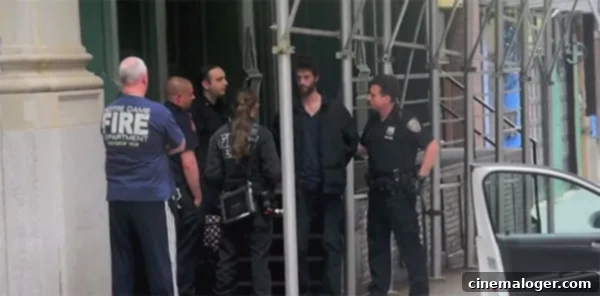
The unsettling event unfolded around 6 PM local time, when an individual described as “disoriented” was observed loitering suspiciously near the entrance of Swift’s upscale New York residence. The man, whose appearance was later detailed to be rather disheveled—sporting scruffy hair and a beard, dressed in dark attire, including a black jacket, and carrying an oversized duffel bag—exhibited behavior that immediately raised red flags for Taylor’s vigilant security personnel. His presence and actions suggested an intent beyond that of a casual fan, prompting her security team to spring into action with commendable speed and professionalism. Their swift intervention ensured that the man was contained before he could gain any unauthorized access to the property or pose a direct threat to anyone inside.
Following the immediate containment of the individual by Swift’s security, emergency services were promptly alerted. A 911 call brought police and firefighters rapidly to the scene to assess the situation and take control. Upon their arrival, authorities took the man into custody, handcuffing him as part of standard procedure. A thorough search of his oversized duffel bag was conducted, a necessary step to rule out the presence of any weapons or harmful objects. While the search did not reportedly uncover any weapons, the individual’s erratic demeanor led officials to classify him as “emotionally disturbed.” As a result, he was transported via ambulance to a local hospital for a comprehensive psychiatric evaluation, underscoring the potential mental health dimensions often involved in such incidents. Crucially, it was confirmed that the “Blank Space” singer was not present at her residence during the encounter, sparing her from witnessing the distressing event unfold. The detailed account of the incident was brought to light by sources such as TMZ, highlighting the public’s interest in celebrity safety.
This incident is far from an isolated event in the life of Taylor Swift, or indeed, for many celebrities navigating the complex landscape of fame. The adoration of millions often comes with the unfortunate side effect of intense, and sometimes dangerous, obsession from a few. Public figures are constantly exposed, their homes and routines often becoming targets for individuals seeking proximity, attention, or who are struggling with their own mental health issues. These encounters underscore the delicate balance between a celebrity’s public persona and their fundamental right to privacy and security in their personal lives. The consistent need for robust security measures is a testament to the persistent threats that can arise from unchecked fanaticism and mental instability.
Indeed, 2016 alone had already presented Taylor Swift with multiple security scares prior to the May 10 event. Just months earlier, in February, her Beverly Hills home became the scene of another unsettling incident. On that occasion, a man reportedly arrived at her property carrying a guitar, professing a desire to pitch a song to the pop superstar. Despite being asked to leave, he stubbornly refused to depart, necessitating the intervention of her security team, who, once again, had to call the police to remove the persistent trespasser. This incident occurred barely weeks after yet another alarming encounter at her driveway entrance. In that instance, an individual dressed in military fatigues was apprehended after being observed lurking suspiciously around the perimeter of her property. These successive events within a short timeframe illustrate a troubling pattern and highlight the constant vigilance required by Swift’s security detail to safeguard her and her private residences from unwanted and potentially dangerous intrusions.
The psychological toll that such repeated security breaches can inflict on an individual, regardless of their celebrity status, is profound. The constant awareness that one’s home—a place traditionally associated with safety and refuge—can be compromised erodes a fundamental sense of security. Celebrities like Taylor Swift are forced to live in a perpetual state of heightened alert, knowing that their public profile makes them vulnerable. This constant vigilance extends beyond their immediate person, encompassing their residences, travel routes, and even their digital footprint. The erosion of privacy, combined with the underlying fear of what an intruder might intend, can lead to significant stress and anxiety, deeply impacting their quality of life. Maintaining a semblance of normalcy and personal freedom becomes an arduous task when one is always looking over their shoulder.
To counter these relentless threats, modern celebrity security measures have evolved into highly sophisticated operations. These protocols often involve a multi-layered approach, incorporating not just visible personnel but also advanced surveillance technology, fortified access points, and intricate intelligence gathering. Security teams are trained to not only react to immediate threats but also to proactively identify and neutralize potential risks before they escalate. This can include monitoring online activity, conducting background checks on individuals who show undue interest, and establishing secure perimeters around residences and public appearances. The goal is to create an impermeable shield while also allowing the celebrity to live as normal a life as possible, a balance that is incredibly challenging to achieve in the glare of the public eye.
The line between devoted fandom and dangerous obsession can often become blurred, especially in the digital age where access to celebrity information is unprecedented. While the vast majority of Taylor Swift’s fans are passionate and respectful, a small, yet significant, minority can develop unhealthy fixations. These obsessions can manifest in stalking, trespassing, or other forms of harassment, driven by a misguided sense of connection or entitlement. It’s crucial to differentiate between genuine appreciation and behavior that crosses into intrusive and threatening territory. This distinction is vital not only for the safety of celebrities but also for fostering a healthy and respectful fan culture.
From a legal standpoint, trespassing is a serious offense, carrying various penalties depending on the jurisdiction and the specifics of the incident. When an “emotionally disturbed” individual is involved, as in the case at Taylor Swift’s loft, the legal process often intersects with mental health support systems. The immediate priority is typically to ensure the safety of all parties and to assess the individual’s mental state. This often leads to psychiatric evaluations, as was the outcome for the man in Tribeca, to determine if they pose a danger to themselves or others and to provide appropriate care. These situations highlight the complex societal challenges that public figures inadvertently become embroiled in.
Ultimately, the incident at Taylor Swift’s Tribeca loft on May 10 serves as a powerful reminder of the inherent vulnerabilities that accompany immense fame. It underscores the critical importance of professional security teams, whose vigilance and rapid response are often the primary line of defense against potential harm. While the public’s fascination with celebrities is natural, it must always be tempered with respect for their personal boundaries and privacy. Ensuring the safety of public figures requires not only robust security measures but also a broader societal understanding and discourse on the difference between admiration and dangerous obsession, allowing them to pursue their careers without constant fear for their well-being.