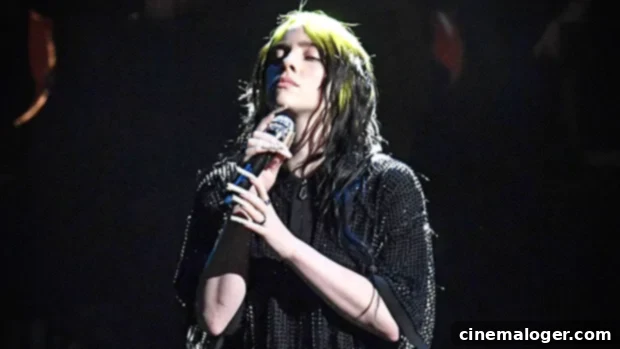
Billie Eilish Unveils “Your Power” Single and Announces Highly Anticipated Album “Happier Than Ever”
A new chapter has officially begun for global superstar Billie Eilish. On Thursday, April 29, days after announcing her sophomore album, Happier Than Ever, would arrive this summer, the 19-year-old artist delivered the first powerful track from the upcoming record: “Your Power.” This haunting single, accompanied by a visually striking music video, marks a significant artistic and personal evolution for Eilish, setting the tone for what promises to be a deeply introspective and impactful album. The song delves into complex themes of manipulation, power dynamics, and the exploitation of young women, showcasing Billie’s remarkable maturity and courage as a songwriter.
“Your Power”: A Profound Statement on Exploitation and Vulnerability
The music video for “Your Power” presents Billie Eilish in a stark, scenic desert landscape, seemingly alone and vulnerable. This isolation is intensified as a large python slowly, yet firmly, begins to coil around her body, eventually constricting her neck. This powerful visual metaphor perfectly complements the song’s unsettling narrative, symbolizing the insidious grip of control and manipulation. Billie’s calm, almost resigned demeanor throughout the video underscores the chilling reality of the lyrics she delivers, portraying a deep understanding of the emotional toll such experiences inflict.
Lyrically, “Your Power” is a raw and accusatory piece, where Billie, initially as an observer, calls out an older man for preying on a younger, unsuspecting woman. The opening lines immediately pull the listener into the narrative: “She said you were a hero / you played the part / but you ruined her in a year / don’t act like it was hard / and you swear you didn’t know / no wonder why you didn’t ask / she was sleeping in your clothes / but now she’s got to get to class / how dare you.” These lines highlight the stark age difference, the abuse of trust, and the manipulative denial often associated with such power imbalances.
As the song progresses, Billie shifts perspective, hinting at personal experience or a deeper empathy born from similar observations: “I thought that I was special / you made me feel / like it was my fault you were the devil / lost your appeal.” This transition from onlooker to someone who has felt the sting of manipulation adds another layer of vulnerability and authenticity to the track. The lyrics directly challenge the perpetrator’s claims of ignorance and feigned innocence, particularly with the piercing lines: “Does it keep you in control / for you to keep her in a cage / and you swear you didn’t know / you said you thought she was your age / how dare you.” This direct confrontation of age discrepancies and predatory behavior resonates deeply, solidifying “Your Power” as an incredibly mature and brave piece of art. It’s a song that not only critiques societal norms but also empowers listeners by giving voice to those who have been silenced.
The choice to address such sensitive and complex topics with such directness further cements Billie Eilish’s status as a formidable creative force in contemporary music. Her ability to craft evocative narratives and pair them with equally compelling visuals speaks volumes about her artistic integrity and her commitment to using her platform for meaningful commentary. The raw honesty of “Your Power” is a testament to her growth, demonstrating her continuous evolution not just as a singer, but as a fearless storyteller.
“Happier Than Ever”: Unveiling Billie’s Highly Anticipated Sophomore Album
The release of “Your Power” comes hot on the heels of the official announcement for Billie Eilish’s second studio album, Happier Than Ever. On Tuesday, April 27, Billie revealed that the highly-anticipated follow-up to her Grammy-sweeping debut, WHEN WE ALL FALL ASLEEP, WHERE DO WE GO?, is slated for release on July 30. The announcement sent waves of excitement through her global fanbase, eager to hear what new sonic landscapes and emotional depths Billie would explore.
Accompanying the announcement was the reveal of the album’s ethereal cover art, which also showcased a significant personal transformation for Billie: the debut of her stunning blonde hair. Gone are the iconic green and black locks that defined her debut era, replaced by a softer, more mature golden hue she first unveiled in mid-March. This visual shift immediately signaled a new era, both aesthetically and thematically, for the young artist.
Billie herself expressed immense personal connection to this project, stating, “This is my favorite thing I’ve ever created and I am so excited and nervous and EAGER for you to hear it.” She continued, “I can’t even tell you. I’ve never felt so much love for a project than I do for this one. hope you feel what I feel,” punctuating her heartfelt message with an enthusiastic, “AHHHHHHHHHHHHHHHHHHHHHH.” This profound statement from Eilish underscores the deeply personal nature of Happier Than Ever, suggesting an album born from intense introspection and genuine artistic passion.
Along with the album’s title and release date, Billie also shared the complete tracklist for Happier Than Ever. The 16-song collection features a compelling mix of previously released singles and intriguing new titles. Alongside “Happier Than Ever” (the title track previewed in her documentary) and “Your Power,” fans will recognize “My Future” and “Therefore I Am.” The full list promises a diverse journey through Billie’s psyche, including tracks like “Getting Older,” “I Didn’t Change My Number,” “Billie Bossa Nova,” “Oxytocin,” “Goldwing,” “Lost Cause,” “Halley’s Comet,” “Not My Responsibility,” “Overheated,” “Everybody Dies,” “NDA,” and “Male Fantasy.” The enigmatic titles alone hint at a rich tapestry of themes, from personal growth and vulnerability to critique of societal pressures and intimate reflections, aligning perfectly with the mature direction suggested by “Your Power.”
View this post on InstagramA post shared by BILLIE EILISH (@billieeilish)
The Evolution of an Artist: Hair, Sound, and Self
The transition from Billie Eilish’s signature slime-green roots to her new blonde look is more than just a cosmetic change; it’s a powerful visual representation of her ongoing personal and artistic evolution. This transformation is deeply symbolic of the journey she undertakes with Happier Than Ever. While her debut album, WHEN WE ALL FALL ASLEEP, WHERE DO WE GO?, explored darker, often macabre themes with a distinct sound, Happier Than Ever appears to embrace a different facet of her being.
Her brother and creative partner, FINNEAS, offered insight into this shift earlier in April. He noted to reporters, “Hair is the easiest way to feel like you’re evolving as a person. Whenever you change your hair style or dye it a different color you feel like you’re growing up a bit.” Finneas acknowledged the significant fan investment in Billie’s previous look, understanding that “the green roots were such a recognizable thing.” He also understood why a major change generates excitement and fixation, adding, “but I think it’s deserving. It looks really great.” This perspective highlights how intimately intertwined Billie’s appearance is with her artistic identity and personal narrative.
The album’s title track, “Happier Than Ever,” was first teased in her acclaimed documentary, Billie Eilish: The World’s A Little Blurry, per CinemaBlend. Towards the end of the film, Billie and Finneas are seen working on a song with poignant lyrics: “when I’m away from you / I’m happier than ever / wish I could explain it better. Wish it wasn’t true.” Such content indicates that while Billie’s outward appearance has softened, she hasn’t entirely abandoned the complex, emotionally charged themes that resonated so strongly in her debut. Instead, she seems to be exploring happiness and freedom not as a simple state, but as a hard-won condition, often with underlying shades of melancholy or introspection.
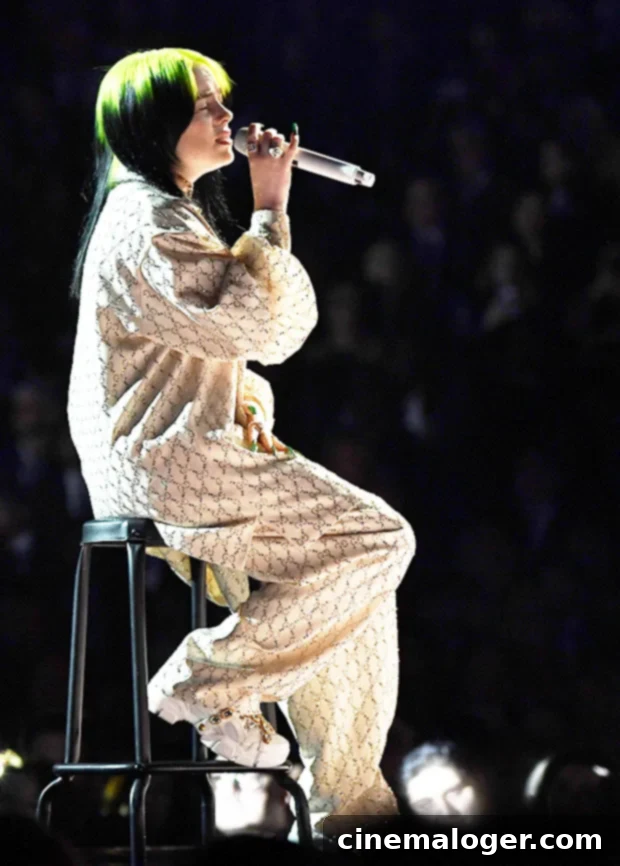
Billie Eilish’s Journey to Finding Happiness and Self-Acceptance
The pursuit of happiness, especially in the harsh glare of the public eye, has been a significant part of Billie Eilish’s personal narrative. The title Happier Than Ever resonates deeply with her past public struggles. In a 2019 interview with Elle, the “bad guy” singer candidly discussed her battles with depression and self-harm. The then-17-year-old Billie revealed a period in her life where she felt “like nothing mattered.” Reflecting on those challenging times, she recounted, “It hurt me to see that. I was a 16-year-old girl who was really unstable.” Her journey since then has been one of remarkable resilience and growth.
In that same interview, Billie shared her triumph over those difficult years: “I’m in the happiest place of my life, and I didn’t think that I would even make it to this age.” She continued, “I haven’t been happy for years. I didn’t think I would be happy again. And here I am—I’ve gotten to a point where I’m finally okay.” This profound realization of self-acceptance and contentment wasn’t attributed to external factors like fame or wealth, but to a deeper, more organic process of personal evolution. “It’s so many different things: growing up, people coming into your life, certain people leaving your life.”
Billie’s message to her fans, particularly those struggling, is one of powerful hope: “All I can say now is, ‘for anybody who isn’t doing well, it will get better. Have hope. I did this shit with fame riding on my shoulders. And I love fame! Being famous is great, but it was horrible for a year. Now I love what I do, and I’m me again. The good me. And I love the eyes on me.” This statement encapsulates the profound personal journey Billie has undertaken, transforming from a young artist burdened by her struggles into a confident, self-aware individual who embraces both her art and her authentic self. This newfound strength and clarity are clearly infused into Happier Than Ever, promising an album that is not only sonically captivating but also emotionally resonant and deeply inspiring.