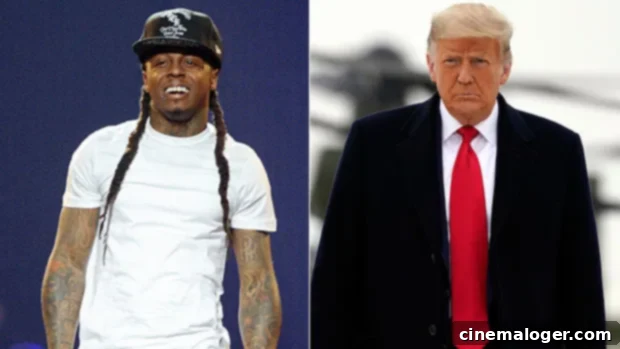
Donald Trump Pardons Lil Wayne and Kodak Black: A Controversial End to a Presidency
In a move that sparked widespread debate and controversy, former President Donald Trump issued a wave of pardons on his final day in office, including those for high-profile rappers Lil Wayne and Kodak Black. These pardons, granted on January 19th, marked a significant and, for many, a questionable conclusion to his presidency. The decisions have ignited discussions about the intersection of politics, celebrity, and the justice system.
The pardons for Lil Wayne and Kodak Black, who had both publicly supported Trump during his reelection campaign in October 2020, were particularly noteworthy. Critics viewed these actions as further examples of cronyism, while supporters argued that they represented acts of mercy and a commitment to criminal justice reform. The pardons brought into sharp focus the complexities and potential for abuse of presidential pardon power.
NEW: @WhiteHouse announces pardons for Steve Bannon, Elliot Broidy, Lil Wayne, Kodak Black and Kwame Kilpatrick pic.twitter.com/z4vVM4ONIn
— Andrew Solender (@AndrewSolender) January 20, 2021
Lil Wayne, whose real name is Dwayne Carter, was facing a potential decade-long prison sentence stemming from a 2019 arrest on gun charges. The charges arose from an incident where authorities discovered a gold-plated Glock .45-caliber handgun, ammunition, and drugs on his private jet. Given Wayne’s prior felony conviction, possession of the firearm and ammunition was a violation of the law.
Kodak Black, born Bill Kapri, was already incarcerated, serving a 46-month prison sentence. This sentence was handed down after he pleaded guilty to making false statements on background check forms while purchasing multiple firearms in two separate incidents in 2019. His sentence was scheduled to end in August 2022. The pardon effectively commuted Kodak Black’s remaining prison term, leading to his release.
Bradford Cohen, the attorney representing both Lil Wayne and Kodak Black, issued a statement highlighting the Trump administration’s commitment to the African-American community. He described the pardons as a demonstration of the administration’s dedication to reforms and commitments, suggesting that these acts were consistent with broader efforts to address issues of justice and equity.
The granting of these pardons aligns with a pattern observed throughout Trump’s presidency. He frequently utilized his pardon power to benefit family members, allies, and supporters who had faced legal troubles. Notable examples include Charles Kushner, Roger Stone, Paul Manafort, George Papadopoulos, and Michael Flynn, individuals convicted of crimes ranging from financial misconduct to obstruction of justice.
The circumstances surrounding Lil Wayne’s pardon are particularly intriguing. In December 2019, he was arrested upon arrival in Miami on a private jet, following an anonymous tip that prompted authorities to search his plane. The search yielded the aforementioned firearm, ammunition, and drugs. Wayne subsequently pleaded guilty to one count of possessing a firearm, which carried a maximum sentence of ten years in prison.
Prior to his guilty plea, Lil Wayne met with then-President Trump in October 2020. The meeting, documented in a photograph shared by Wayne on social media, sparked considerable controversy and criticism. Wayne expressed his support for Trump’s Platinum Plan, an initiative aimed at addressing issues facing the Black community. The endorsement drew sharp criticism from fans and fellow artists, many of whom questioned Wayne’s alignment with Trump’s policies and rhetoric.
The meeting between Lil Wayne and Donald Trump drew reactions from across the entertainment industry. Questlove expressed disbelief and disappointment, while 50 Cent humorously suggested that Trump should call Wayne to leverage his influence before the end of his term. The reactions underscored the divisive nature of the endorsement and the potential ramifications for Wayne’s public image.
The controversy surrounding Lil Wayne’s support for Trump seemingly impacted his personal life. Rumors circulated about a potential breakup with his girlfriend, Denise Bidot, after the photograph with Trump surfaced. While they initially dispelled the split speculation, they eventually unfollowed each other on social media, fueling further speculation about the state of their relationship.
Like Lil Wayne, Kodak Black also expressed support for Donald Trump in the lead-up to the November 2020 election. He publicly endorsed Trump’s Platinum Plan, praising its focus on promoting ownership and economic empowerment within the Black community. Kodak Black’s advocacy for the plan, conveyed through social media, highlighted his alignment with certain aspects of Trump’s agenda.
What do you think of the platinum plan? @bradfordcohen sent it to me and I read it ,this is what the community needs…. more ownership. That plan is right! I want to help with justice reform when I am out as well. @realDonaldTrump #justicereform #prisonreform
— Kodak Black (@KodakBlack1k) October 26, 2020
Adding another layer to the narrative, Kodak Black reportedly pledged to donate $1 million to charity if he received a pardon. While the tweet containing this promise has since been deleted, the sentiment reflects a desire to contribute to positive causes upon his release. Furthermore, during his incarceration, Kodak Black organized a Christmas toy drive for children, demonstrating a commitment to community service.
The pardons granted to Lil Wayne and Kodak Black have been met with a range of responses, highlighting the complexities and nuances surrounding the issue of presidential pardons. Some critics argue that these pardons undermine the rule of law and reward individuals who have demonstrated questionable behavior. Others maintain that they represent acts of compassion and provide opportunities for rehabilitation and second chances. The debate underscores the divergent perspectives on the role of the justice system and the power of executive clemency.
The timing of these pardons, granted during Trump’s final days in office, has also fueled scrutiny and debate. Critics argue that the pardons were politically motivated and intended to reward loyalty and support. Supporters contend that Trump was exercising his constitutional authority to address perceived injustices and promote criminal justice reform. The controversy surrounding the timing of the pardons adds another layer of complexity to an already contentious issue.
Ultimately, the pardons of Lil Wayne and Kodak Black serve as a stark reminder of the vast power wielded by the President of the United States. The ability to grant clemency can have a profound impact on individuals’ lives, and the exercise of this power often sparks intense debate and scrutiny. The cases of Lil Wayne and Kodak Black exemplify the complexities and controversies that can arise when politics, celebrity, and the justice system intersect.
The lasting impact of these pardons remains to be seen. Both Lil Wayne and Kodak Black have the opportunity to use their platforms to advocate for positive change and contribute to their communities. However, they will also face ongoing scrutiny and criticism from those who question the circumstances surrounding their pardons. The legacy of these pardons will likely be shaped by the actions and contributions of Lil Wayne and Kodak Black in the years to come.
The story of Lil Wayne and Kodak Black’s pardons offers a compelling glimpse into the intersection of power, politics, and celebrity. It serves as a reminder of the complexities inherent in the justice system and the potential for both positive and negative outcomes. As these individuals move forward with their lives, their stories will continue to be debated and analyzed, shaping our understanding of justice, forgiveness, and the enduring impact of presidential decisions.