Shockwave at the Hollywood Bowl: Beyonce and Jay-Z’s Calm Departure After Dave Chappelle Stage Attack
In an evening that sent ripples through the entertainment world, music icons Beyonce and Jay-Z were among the high-profile attendees at Dave Chappelle’s ill-fated comedy show at the Hollywood Bowl on May 3. The event, part of the inaugural “Netflix Is A Joke” festival, took an unexpected and alarming turn when the renowned comedian was physically assaulted on stage. Despite witnessing the shocking incident firsthand, the power couple maintained a remarkably composed demeanor as they exited the venue, a testament to their seasoned ability to navigate intense public moments. Their presence underscored the star-studded nature of Chappelle’s audience, transforming a routine comedy night into a high-stakes spectacle. The incident highlighted the increasing vulnerability of performers, even as Chappelle delivered a series of record-breaking performances that celebrated his enduring legacy in comedy.
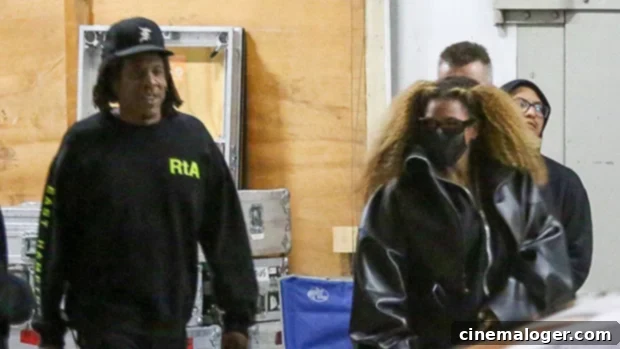
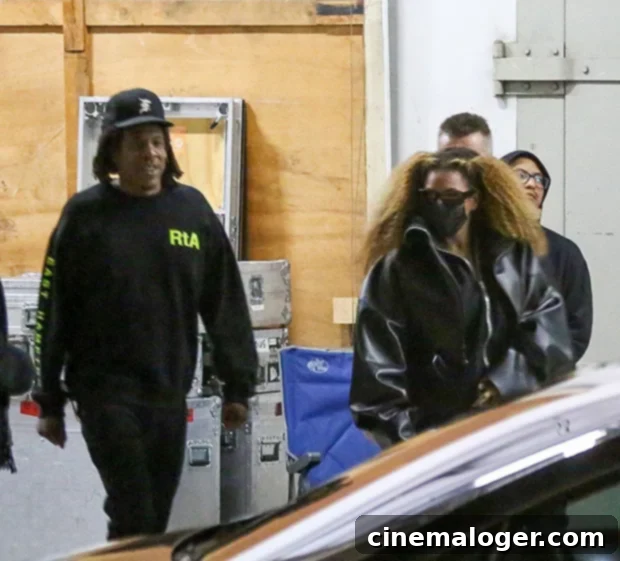
The couple was indeed seen leaving Dave Chappelle‘s show after witnessing a shocking armed attack, alongside several other mega-stars who had gathered to enjoy Chappelle’s performance. Beyonce, 40, made her exit from the Hollywood Bowl looking understated yet chic, clad in an oversized leather jacket, dark sunglasses, and a black face mask – a familiar ensemble for maintaining privacy in public. Jay-Z, 52, mirrored her casual yet discerning style, sporting a black Fear Of God x New Era ball cap and an RtA shirt. Photos published in the Daily Mail on May 4 captured their relaxed appearance, which, all things considered, struck many as remarkably calm given the terrifying attack they had just witnessed. Their composure in the face of such an unsettling event highlighted not only their celebrity status but also a practiced detachment from chaos, a characteristic often associated with their long careers in the public eye. This subtle reaction became a point of discussion, contrasting with the dramatic unfolding of events on stage.
The Shocking Incident: Dave Chappelle Attacked On Stage
The incident unfolded dramatically during Chappelle’s stand-up set at the legendary Hollywood Bowl, a venue globally recognized for hosting iconic musical and comedic performances. Mid-performance, an individual identified as Isaiah Lee, 23, suddenly rushed the stage from the audience. Reports confirmed that Lee was armed with a replica gun that also contained a knife blade, adding a dangerous edge to the assault. The abruptness and violent nature of the attack momentarily stunned the thousands in attendance, transforming an evening of laughter into one of alarm. Security personnel, along with several quick-thinking individuals, including fellow celebrities, swiftly intervened to apprehend the assailant. This unprecedented breach of security at such a high-profile event immediately raised critical questions about the safety of performers and the adequacy of measures in place to protect them in public forums.
The “Netflix Is A Joke: The Festival” was initially conceived as a grand celebration of comedy, showcasing hundreds of comedians across numerous venues throughout Los Angeles. Chappelle’s performance was undoubtedly one of the festival’s crown jewels, attracting a sold-out crowd teeming with entertainment industry luminaries, cultural influencers, and devoted fans. The attack, therefore, not only severely disrupted his highly anticipated set but also cast a considerable shadow over the entire festival, sparking widespread concern and intense discussions across traditional and social media platforms about the escalating risks faced by public figures in live settings. The surreal scene played out before thousands, creating an unforgettable and deeply unsettling moment that will undoubtedly be remembered as a pivotal point in the history of live comedy, forcing a reevaluation of the boundaries between audience and performer.
A Star-Studded Audience and Swift Celebrity Reactions
Queen Bey and her hubby were far from the only celebrities in attendance at the Netflix is a Joke festival on that Tuesday evening. The audience was a veritable who’s who of Hollywood’s elite, with luminaries such as Diddy, Madonna, Christina Milian, Elon Musk, and Dr. Dre all present when Isaiah Lee stormed the stage. The swiftness with which the situation escalated and was subsequently contained was a powerful testament to the combined efforts of venue security and the immediate intervention of several courageous individuals, including other celebrities who instinctively rushed to Chappelle’s aid. This elite fan club also notably included fellow comedy legends Chris Rock and Jamie Foxx, both of whom joined the controversial comedian onstage in the immediate aftermath of the attack, offering crucial support and attempting to lighten the heavy, stunned atmosphere with their presence and words. Their collective response highlighted a powerful solidarity within the entertainment community.
Jamie Foxx’s Immediate Heroism and Powerful Words
Jamie Foxx, a long-time friend, respected colleague, and fellow comedic luminary of Dave Chappelle, reportedly distinguished himself through his remarkable courage and quick thinking. He was among the very first individuals to rush onstage and physically assist Dave after the unexpected and violent assault. His rapid response and protective instincts were widely lauded by many, including Chappelle himself, who publicly acknowledged Foxx’s invaluable intervention. Dave affectionately remarked, “Whenever you’re in trouble, Jamie Foxx will show up in a sheriff’s hat,” a heartfelt tribute highlighting Foxx’s dependable presence and readiness to act decisively in a crisis. This poignant moment showcased the deep camaraderie and protective bond shared among members of the comedy community, revealing the genuine care they have for one another in times of adversity, and serving as a powerful example of real-life heroism amidst chaos.
Foxx’s response to Chappelle’s gratitude was equally profound, moving, and heartfelt, resonating deeply with everyone present. He passionately declared, “Listen, I just want to say, this man is an absolute genius. We’ve got to make sure we protect him at all times. For every comedian who comes out here, this means everything. You’re a genius. You’re a legend, I enjoyed myself thoroughly, and we’re not going to let nothing happen to you.” His powerful words echoed across the Hollywood Bowl, finding deep resonance not only with the stunned audience but also with the wider comedy community, emphasizing the vital importance of safeguarding performers, especially those who bravely tackle sensitive subjects and consistently push the boundaries of artistic expression. Foxx’s impromptu speech served as a poignant and timely reminder of the inherent vulnerability of artists and the collective responsibility to ensure their safety and unwavering freedom of expression, particularly in an increasingly volatile public sphere.
Chris Rock’s Unforgettable Quip
Adding a much-needed layer of dark humor to the exceptionally tense situation, Chris Rock, who himself had been at the very center of a widely publicized and infamous on-stage incident just weeks prior at the Academy Awards, couldn’t resist delivering a perfectly timed and pointed joke. “Was that Will Smith?” Chris quipped alongside fellow comedian Jimmy Carr following the attack, directly referencing his infamous on-stage slap from the I Am Legend star during the Oscars on March 27. The audience, still reeling from the shock and processing the gravity of what had just transpired, greeted Rock’s timely, audacious, and somewhat self-referential remark with literal screams of laughter – a spontaneous and cathartic release of pent-up tension. This extraordinary moment not only vividly demonstrated Rock’s quick wit and unparalleled ability to find humor in adversity, even when it parallels his own recent trauma, but also profoundly underscored the unique and sometimes controversial position comedians hold in processing and commenting on public events, even those directly involving themselves or their peers. It was a stark and unforgettable reminder of the fragile line between comedy and reality, and the unexpected, often jarring ways in which these worlds can dramatically collide on stage.
Dave Chappelle’s Resilience and Official Stance
In the immediate wake of the deeply disturbing incident, Dave Chappelle’s official representative, Carla Sims, promptly issued a statement on May 4. The statement firmly asserted Chappelle’s unwavering determination that the incident would not, under any circumstances, be permitted to overshadow his monumental achievements and the significant cultural impact he had made during the “Netflix Is A Joke” festival. Sims’ official communication eloquently reflected Chappelle’s steadfast resolve to maintain the integrity and celebratory spirit of his comedic work despite the violent and unsettling interruption. It was a clear and unambiguous message that the reprehensible act of aggression would not, and could not, define the resounding success of his historic and critically acclaimed run at the iconic venue, signaling his commitment to reclaiming the narrative of the night.
“The performances by Chappelle at the Hollywood Bowl were epic and record-breaking, and he refuses to allow last night’s incident to overshadow the magic of this historic moment,” Carla told The Hollywood Reporter, reiterating the comedian’s powerful stance. She further elaborated on the profound significance and extensive reach of his series of shows: “Dave Chappelle celebrated four nights of comedy and music, setting record-breaking sales for a comedian at the Hollywood Bowl. This phenomenal run ties Chappelle with the legendary Monty Python for the most headlined shows by any comedian at the Hollywood Bowl, a truly remarkable feat. He successfully reached an astounding 70,000 fans from incredibly diverse backgrounds during the first-ever Netflix Is A Joke: The Festival, and he adamantly refuses to allow last night’s isolated incident to overshadow the true magic and historical significance of this moment.” This comprehensive statement powerfully underscored the triumph of Chappelle’s artistic achievement, emphasizing the extensive reach, broad appeal, and diverse audience engagement his comedy commands. It served as a definitive declaration that the profound artistic merit and lasting cultural impact of his performances would definitively endure far beyond the transient memory of a single violent act, cementing his place in comedic history.
The Attacker and Legal Repercussions
Following the swift and effective intervention by both venue security and courageous bystanders, the attacker, Isaiah Lee, was promptly and successfully detained on the premises. He subsequently faced severe legal charges, specifically a felony assault with a deadly weapon, underscoring the serious nature of his actions. The replica gun discovered in his possession, which was notably reported to contain a concealed knife blade, significantly elevated the gravity and potential legal consequences of the charge. His bail was subsequently set at a substantial $30,000, clearly signaling the gravity with which law enforcement officials viewed the incident and the serious threat it posed. The legal proceedings that commenced highlighted the unwavering zero-tolerance policy for such brazen acts of violence, especially when perpetrated against performers in public settings, serving as a stark reminder of the legal consequences awaiting those who attempt to disrupt public events through physical aggression and intimidation.
Further investigations into Lee’s background, his mental state, and potential underlying motives were immediately initiated by authorities. While initial reports did not immediately offer a clear or comprehensive explanation for his irrational actions, law enforcement continued to delve deeper into any possible connections or prior incidents. The attack quickly sparked broader societal conversations about critical issues such as mental health awareness, the worrying ease of access to replica weapons that can be modified, and the absolute necessity of robust security protocols for all large-scale public gatherings and performances. Authorities emphatically emphasized their unwavering commitment to diligently ensuring the paramount safety of both performers and audiences alike, openly acknowledging the crucial importance of thoroughly addressing any vulnerabilities that were so brazenly exposed by such a shocking and direct attack on a public figure.
Broader Implications for Live Entertainment and Performer Safety
The violent attack on Dave Chappelle was far more than just an isolated incident; it quickly transformed into a poignant and alarming symbol of the increasing dangers and heightened risks faced by performers in live settings around the globe. In an era where public discourse is often incredibly charged, politically polarized, and social media can instantly amplify both fervent praise and vehement dissent, the delicate line between legitimate audience engagement and outright physical aggression appears to be increasingly blurred. This specific event, coming mere weeks after the infamous Will Smith-Chris Rock incident at the Oscars, propelled the critical issue of performer safety to the absolute forefront of industry-wide discussions and policy reevaluations.
Consequently, concert venues, comedy clubs, and other live entertainment spaces are now under immense and unprecedented pressure to thoroughly re-evaluate, bolster, and modernize their security measures. The presence of such an array of high-profile celebrities, including global icons like Beyonce and Jay-Z, only served to underscore the significant potential risks involved, making the urgent need for robust and impenetrable security protocols even more critical. The incident served as an undeniable wake-up call, prompting venues to meticulously consider everything from significantly enhanced screening procedures for attendees to the deployment of increased security personnel, ensuring that artists can perform their craft without the pervasive fear of physical harm or threat. The entertainment industry is now grappling with the delicate and complex balance of creating accessible, intimate, and engaging experiences for dedicated fans while simultaneously guaranteeing the ironclad safety and protection of its biggest stars and emerging talents.
Moreover, the incident acutely highlighted the unique vulnerability inherent to stand-up comedians. Unlike musicians who might perform behind instruments, shielded by stage setups, or with a larger supporting band presence, stand-up comedians often stand alone on a bare stage, directly and intimately engaging with their audience, making them particularly susceptible to sudden disturbances or physical attacks. The spontaneous and unscripted nature of live comedy, which thrives on dynamic audience interaction and improvisation, suddenly feels considerably more precarious and fraught with potential danger. This new reality necessitates a comprehensive re-evaluation of how security measures are thoughtfully integrated into the comedic performance environment without stifling the very spontaneity, authenticity, and direct connection that makes it so engaging and beloved. The Chappelle attack, therefore, left an indelible and challenging mark on the industry, forcing it to confront complex and urgent questions about safety, security, artistic freedom, and the ever-evolving, often perilous relationship between performers and their audiences in the modern, digitally interconnected era.