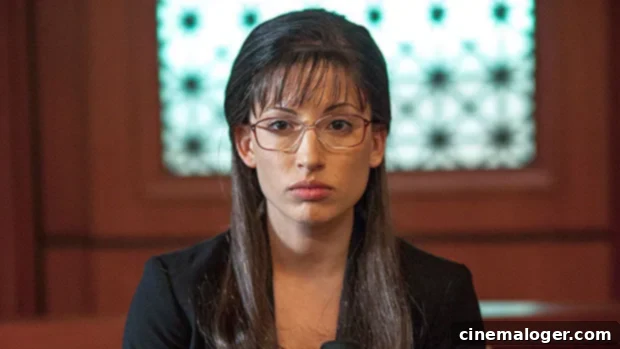
Jodi Arias: Dirty Little Secret Revisited – Tania Raymonde on Portraying a True Crime Enigma for Lifetime
Lifetime’s “Ripped from the Headlines” series has captivated audiences for years, bringing some of the most sensational true crime stories to the small screen. Among these, Jodi Arias: Dirty Little Secret, which first aired in 2013, stands out as a uniquely intense and groundbreaking production. What made this film so distinct was its unprecedented timeline: it was filmed almost simultaneously with the real-life murder trial of Jodi Arias, who was accused of brutally killing her ex-boyfriend, Travis Alexander. This immediacy thrust both the cast and crew into an unfolding drama, creating an unparalleled filmmaking experience. Arias was ultimately convicted of first-degree murder in 2013 and received a sentence of life in prison without the possibility of parole in 2015.
As Lifetime prepares to air a special edition of Jodi Arias: Dirty Little Secret on August 8th, followed by a new special, Jodi Arias: Cellmate Secrets, we revisit this compelling story through the eyes of the actress who brought Jodi Arias to life. HollywoodLife had the exclusive opportunity to speak with Tania Raymonde, who bravely tackled the complex role of Jodi Arias. In our conversation, Raymonde shared fascinating insights into the challenges and emotional toll of portraying a real person whose fate was still being decided in a courtroom, revealing how scripts were constantly revised based on new developments from the ongoing trial. Raymonde also reflected on the enduring legacy of the case, admitting that she still thinks about Jodi Arias and ponders how the trial’s narrative might have shifted if it occurred in today’s social climate.
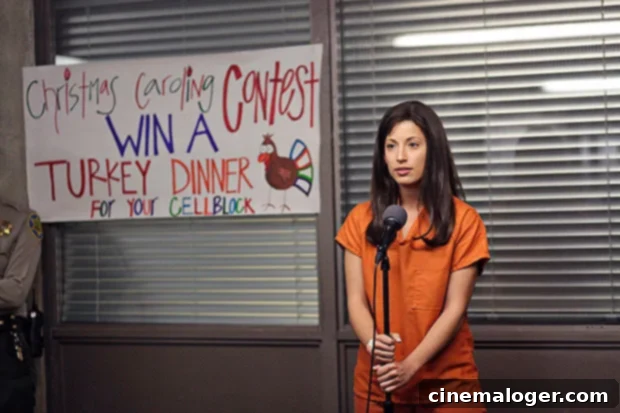
Tania Raymonde’s First Encounter with the Jodi Arias Case
Stepping into the shoes of a real-life figure, especially one as notorious as Jodi Arias, presents unique challenges for an actor. For Tania Raymonde, her initial awareness of the case was somewhat coincidental, a testament to the pervasive media coverage surrounding the trial. When asked if she was familiar with Jodi Arias prior to taking on the role, Raymonde admitted, “I wasn’t exactly. I do remember at the time though that she was sort of in the general air. I started to hear some stories and I recognized her name.”
The true shock, however, came when the script landed in her hands. “It was all coincidentally happening at the same time, so I had heard of her and I vaguely knew about the story. But it wasn’t until I was sent the script that I put two and two together and realized that, wait, this is the same woman. This is this murder case that’s happening right now, and they’re making a movie about it now. It was crazy to me,” Raymonde recounted. This unique situation of a dramatization unfolding in real-time with the actual events was an entirely new experience for the seasoned actress. “I’ve never been sent anything based on a real life event or real person drama that was unfolding in real time. That’s never happened before,” she added, highlighting the unprecedented nature of the production.
Navigating Preparation Amidst Unfolding Reality
Preparing for a role where the subject’s fate is still being determined by a jury in real-time posed an extraordinary set of hurdles for Tania Raymonde. Traditional methods of character study often involve extensive research into historical accounts, finalized court transcripts, and retrospective analyses. However, for Jodi Arias: Dirty Little Secret, the narrative was literally being written day by day. “At first, when I was getting ready, we didn’t have too much time to prep. Also, if I recall, we shot the movie pretty quickly,” Raymonde explained, emphasizing the fast-paced nature of the production.
The fluidity of the real-life trial meant constant adjustments to the script. “Things were always changing depending on what was going on in her testimony and what new facts were coming out in the press,” Raymonde revealed. Despite the shifting sands, her dedication to authenticity remained steadfast. She immersed herself in available media, watching “as much as I possibly could have like real life interviews of her, everything that I could find,” in an effort to “really get inside her head.” Yet, this intense immersion quickly reached a saturation point. With Arias dominating nightly news programs like Nancy Grace and HLN, Raymonde realized the need to create a boundary. “I’d come home from work after 12 hours of working on the scenes inside Jodi’s head, and then Nancy would just be yelling at the TV about Jodi for two hours,” she recalled. To protect her performance from external opinions and maintain her artistic integrity, Raymonde made a crucial decision: “So I just blocked all that stuff out because once I made a decision on how to play her, I had to stick with that. I didn’t want to get influenced by anybody’s opinions after that.” This strategic disengagement allowed her to remain true to her interpretation of the character, unswayed by the court of public opinion.
Evolving Perspectives: Empathy and the #MeToo Lens
Portraying a character involved in a high-profile murder case often forces an actor to confront their own biases and perspectives. For Tania Raymonde, her view of Jodi Arias underwent a subtle yet significant evolution throughout the filming process. Initially, she approached the role with a deliberate sense of objectivity, striving to understand the character without immediate judgment. “I think I always try to go in with a very objective perspective at first,” she stated. However, as filming progressed and she delved deeper into the intricacies of Arias’s story, an unexpected shift occurred.
“Inevitably, when playing someone like her, after a while you tend to really sympathize with her. It was very hard for me to divorce myself from that opinion,” Raymonde confessed. This development prompted her to consider broader societal contexts, particularly in hindsight. She pondered how public opinion might have differed if the trial had taken place in a more recent era. “I always think about how this case would have unfolded if this has happened now. If we think about back then, that was way before the Me Too movement,” she mused. The #MeToo movement, which gained significant traction years after Arias’s trial, fundamentally altered public discourse around abuse, consent, and victimhood. Raymonde speculated on its potential impact: “I just wonder if the public opinion would have been a little bit different. Look, she murdered the guy, that’s for sure. No doubt, and it was horrible. But I wonder if it would have been a little bit different in light of this whole Me Too era and women fighting back against different kinds of abuse.” This reflection underscores the complex moral landscape of true crime and the ever-shifting societal lenses through which such events are viewed, without ever excusing the gravity of the crime itself.
From Love Story to Tragedy: The Mental Process of Portrayal
The internal journey an actor undertakes to embody a character is often profound, particularly when the role demands delving into dark psychological spaces. For Tania Raymonde, capturing Jodi Arias’s mental state required her to trace the character’s descent from love to obsession and ultimately, to violence. Raymonde approached the narrative primarily as a love story, at least from Jodi’s perspective. “The movie unfolds, from Jodi’s perspective at least, as kind of a love story. Most of the movie is Jodi and Travis falling in love, and then Jodi falling very deeply in love and becoming obsessed and then becoming more obsessive,” she explained.
This psychological progression was crucial to her performance. “Eventually, she just didn’t tolerate the situation she kind of put herself in and killed the guy. I always thought of it as a romance or a love story,” Raymonde added. A key advantage during production was the decision to shoot the movie chronologically. This method allowed Raymonde to experience the emotional arc organically, building up to the murder scene rather than approaching it out of sequence. “I really didn’t think about the murder, or any of that until we got to those parts. We shot chronologically, which was so nice,” she highlighted. The murder sequence, along with the trial scenes, were left until the very end, a practical necessity given that the trial transcripts were constantly being rewritten as events unfolded in real-time. “It was nice in a way. I got to meet Travis, fall in love with Travis, and become obsessed with Travis in a way that was so organic that I didn’t really have to think about her killing him until the scenes were filmed,” Raymonde concluded, illustrating how the chronological shooting schedule aided her in authentically portraying Arias’s tragic journey.
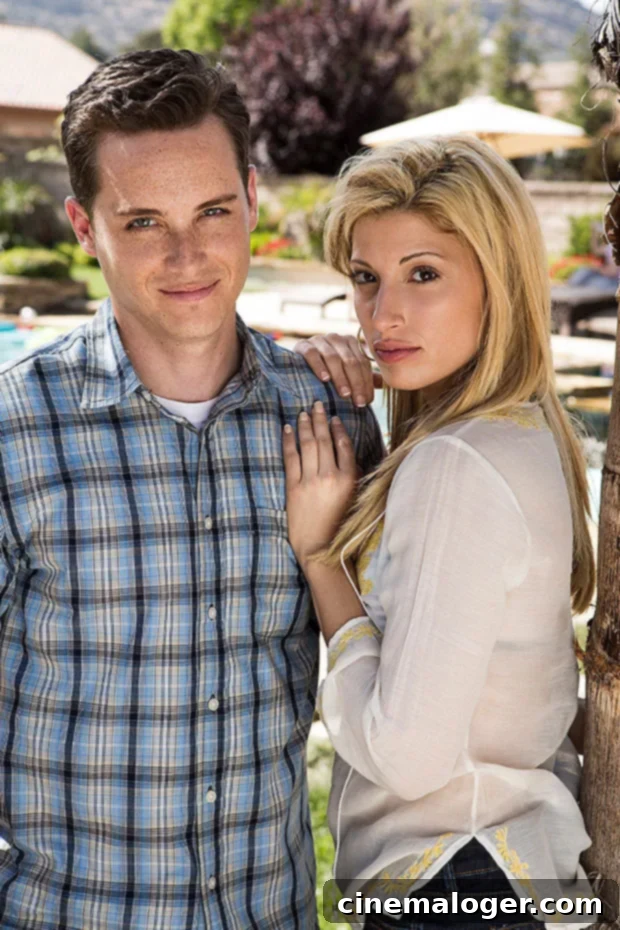
The Uniqueness of Filming in Real-Time: A Fast-Paced Challenge
The production of Jodi Arias: Dirty Little Secret was an unparalleled experience for Tania Raymonde, largely due to its unique commitment to mirroring the ongoing real-life trial. This meant constant script revisions and an improvisational approach to capture the most current developments. When asked about the difficulty of such a fast-paced and ever-changing environment, Raymonde admitted, “I kind of liked it.” This enthusiasm for the spontaneous nature of the work highlights her adaptability as an actress.
The trial segments of the film were particularly challenging yet fascinating, as they aimed for an almost verbatim recreation of the courtroom drama. “The trial parts were the parts that we had so much of almost exact footage to base it on. There was so much coverage and close ups of her on the stand, and some of the dialogue was word for word what she said when she was on the stand with the prosecutor. That wasn’t too tough,” she explained. However, the uncanny synchronicity between the real-life events and the filming schedule was truly disorienting. Raymonde vividly recalled the surreal experience: “That was crazy, though. She’d be on TV every night and the next day, I’m sitting in the same courthouse wearing the same outfit saying the same line she said yesterday on live TV. It was a trip.” This immersive, almost meta-theatrical approach to filmmaking allowed Raymonde to inhabit the role with an intensity that few actors ever experience, blending the boundaries between reality and dramatization in an unforgettable way.
Seven Years On: The Lingering Impact of a Media Phenomenon
More than seven years have passed since Jodi Arias: Dirty Little Secret first aired, and the passage of time offers a unique vantage point to reflect on the case and its profound impact. For Tania Raymonde, the memory of portraying Jodi Arias remains vivid, prompting deeper considerations about the media’s role in shaping public perception and the fleeting nature of infamy. “Of course I do,” she replied when asked if she still thinks about Jodi Arias. “This movie could almost be like a weird commentary on the media and press because she was so infamous for what she did.”
The Arias trial was a sensational media circus, dominating headlines and cable news for months. “Everybody knew her name and about the trial that was going on. It was everywhere. It seemed like the most important thing going on,” Raymonde observed. Jodi Arias became a household name, gracing “the cover of every single magazine at the grocery store and on every single TV channel.” Yet, Raymonde notes how quickly even the most pervasive infamy can fade. “Now you look back on it, and I think you’d be hard pressed for people to remember maybe even who she was.” This observation speaks to the transient nature of modern media cycles and the public’s often short attention span for even the most dramatic true crime narratives. She continued, “That was just a handful of years ago, so it just shows you that certain people’s stories, certain true life crimes, certain things just catch this crazy popular attention and it becomes this insane snowball effect, most likely to Jodi’s detriment. I think she was made an example of.” Beyond the sociological commentary, Raymonde also considers the human element, pondering “about what a life sentence is like for her,” acknowledging that while “people get away with worser crimes, but murder is murder.” Her reflections underscore the lasting complexity of the Jodi Arias case, both as a true crime saga and as a mirror reflecting societal fascinations with justice, media, and human psychology.
Conclusion: The Enduring Legacy of Jodi Arias and Lifetime’s True Crime Storytelling
The story of Jodi Arias and Travis Alexander continues to resonate with audiences, a testament to the enduring fascination with true crime narratives and the human psyche. Tania Raymonde’s portrayal in Jodi Arias: Dirty Little Secret offered a rare glimpse into the immediate unfolding of a notorious case, forcing both actress and viewer to grapple with the complex layers of motivation, obsession, and tragedy. Her unique experience, from preparing with real-time trial updates to managing media saturation and reflecting on the case through the lens of modern social movements, highlights the profound impact such roles can have.
As Lifetime re-airs this pivotal movie and introduces Jodi Arias: Cellmate Secrets, it reminds us of the profound questions that cases like these raise about justice, perception, and the nature of evil. Tania Raymonde’s nuanced performance and thoughtful reflections provide invaluable insight into the challenges of bringing such a high-stakes, real-life drama to the screen. The movie, like the case itself, serves as a powerful, albeit disturbing, commentary on human relationships, the criminal justice system, and the indelible mark left by media obsession.