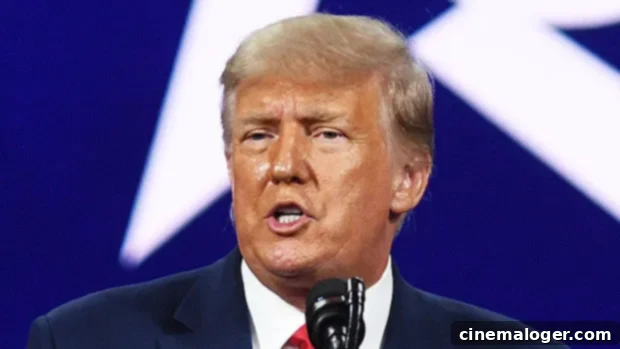
Donald Trump’s Post-Presidency Air Travel: From Air Force One Majesty to Cessna Practicality
The presidential perks enjoyed by Donald Trump during his four years in office concluded sharply when Joe Biden assumed the presidency on January 20th. For a man who epitomized luxury and grandeur, the transition from the highest office in the land brought with it a significant downgrade in his travel arrangements, particularly when it came to air transport. Gone are the days of the majestic Air Force One, a symbol of American power and prestige. Instead, the former President has been seen embracing a much more compact form of private aviation, specifically a Cessna Citation X, a shift that quickly became a talking point across social media platforms.
On Tuesday, March 9th, cameras captured Donald Trump boarding the mid-size Cessna jet for a flight departing from New York City. Photos, circulated by outlets such as the Daily Mail, showed the 74-year-old former President, clad in a long black coat, grasping a handrail for support as he ascended the relatively small staircase into the aircraft. This visual contrast from his previous mode of transport — a colossal Boeing 747 — immediately highlighted the stark realities of post-presidential life and the relinquishing of the unparalleled conveniences afforded to the Commander-in-Chief.
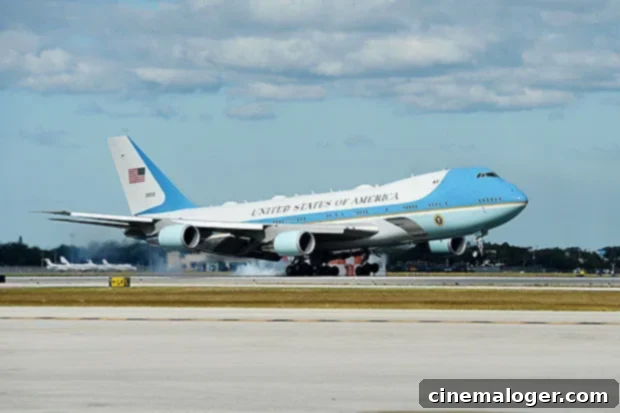
Air Force One: The Pinnacle of Presidential Air Travel
For four years, Donald Trump experienced the unparalleled luxury and security of Air Force One. It’s crucial to understand that “Air Force One” isn’t a single aircraft, but rather the air traffic control call sign for any U.S. Air Force aircraft carrying the President of the United States. However, the term is most commonly associated with the two highly customized Boeing VC-25A aircraft (military versions of the Boeing 747-200B series) that serve this purpose. These planes are not merely passenger jets; they are flying command centers, designed to operate under any circumstances, including a national emergency.
The interior of Air Force One is a testament to bespoke engineering and opulence. It boasts approximately 4,000 square feet of floor space spread over three levels. Within this vast area, the President enjoys private quarters, including a bedroom, an office, and a private bathroom equipped with a shower. There are extensive conference rooms, capable of hosting sensitive meetings with top advisors, a medical operating room complete with a doctor on board for every flight, and two galleys that can feed up to 100 people at a time. Furthermore, the aircraft is equipped with advanced avionics, sophisticated secure and non-secure communication systems, and defensive countermeasures to protect against potential threats. The level of luxury, combined with state-of-the-art security and communication capabilities, makes Air Force One truly one-of-a-kind and a powerful symbol of presidential power and global reach.
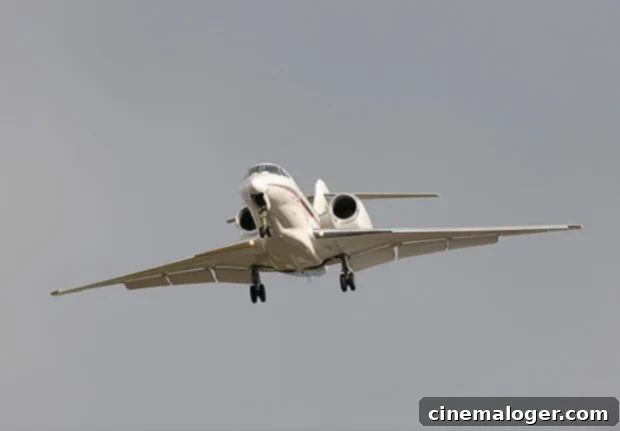
The Cessna Citation X: A Return to Private Executive Travel
The Cessna Citation X, the aircraft spotted carrying the former President, presents a stark contrast to the sprawling Air Force One. This 1997 model, reportedly registered to Donald Trump’s company, The Trump Organization, is a high-performance business jet. While impressive in its own right for its speed – it was one of the fastest civilian jets in the world at the time of its introduction – its interior dimensions are significantly more modest. Designed primarily for executive and private travel, the Citation X typically accommodates between nine and twelve passengers, offering a cabin environment that emphasizes efficiency and comfort for smaller groups rather than presidential-level amenities.
At approximately $20 million, the Cessna Citation X is a significant asset, but it offers none of the unique features or vast space of a custom-built presidential airliner. The cabin height, for instance, is around 5 feet 7 inches, meaning the 6-foot-3-inch former reality TV star, famous for The Apprentice, would be unable to stand upright inside. Instead of private cabins, expansive boardrooms, or sectional sofas, the interior typically features two sets of facing club chairs, providing a functional yet relatively compact space for discussions or relaxation. This aircraft represents a shift back to a more conventional mode of high-end private travel, a world away from the secure, expansive, and highly customized environment of Air Force One.
“Trump Force One”: The Pre-Presidential Flying Billboard
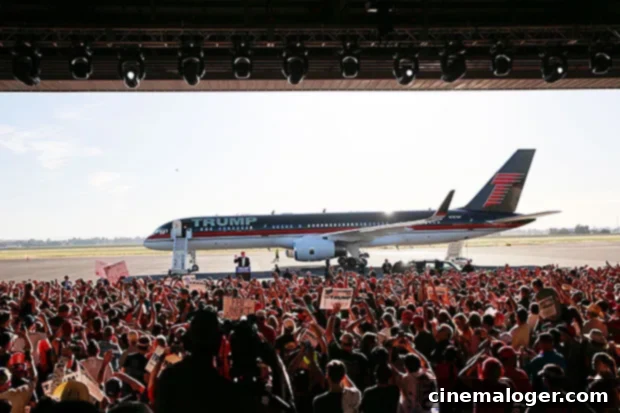
What makes the choice of the Cessna even more curious is the existence of Donald Trump’s own customized Boeing 757, informally dubbed “Trump Force One” during his 2016 presidential campaign. This larger aircraft, a Boeing 757-200, was a fixture on the campaign trail, instantly recognizable with its bold “TRUMP” branding on the fuselage and tail. Far from a standard private jet, this plane was extensively customized and served as a powerful symbol of Trump’s personal brand and wealth during his run for the White House.
The Boeing 757, which could seat 43 passengers, featured luxurious amenities that included gold-plated seatbelts, a private bedroom, a master bathroom with a shower, a dining area, and a large conference room. Its spacious interior and personalized touches allowed Trump to conduct meetings, strategize, and relax in comfort while traversing the country. The plane essentially served as a mobile office, home, and campaign rally backdrop. The fact that he was seen boarding the much smaller Cessna Citation X, rather than his personalized Boeing 757, led many to speculate about the reasons behind this choice, ranging from operational costs and maintenance to a symbolic shedding of past grandiosity, or simply a reflection of current travel needs.
The Stark Contrast: From Presidential Palace to Private Office
The transition from Air Force One to a Cessna Citation X is more than just a change in aircraft; it’s a profound shift in status, security, and operational capability. Air Force One is not only designed for comfort but is also a fortress in the sky, equipped with advanced defensive systems, missile countermeasures, and the ability to operate as a self-contained command center in a crisis. Its onboard resources include a fully functional operating room and extensive communication capabilities, ensuring the President remains connected and protected at all times.
In contrast, the Cessna Citation X, while a sophisticated and swift private jet, offers none of these unparalleled features. It lacks the expansive private cabins, the extensive security measures, or the logistical support required for presidential travel. The experience shifts from one of absolute privacy and security, where the President is shielded from the public eye and global threats, to a more conventional private flight experience, albeit a high-end one. This stark difference highlights the unique nature of the presidency and the enormous infrastructure that supports the office, which is immediately withdrawn upon departure.
The Internet Reacts: Social Media’s Take on the Downgrade
Unsurprisingly, the sight of Donald Trump boarding the comparatively diminutive Cessna did not go unnoticed by the ever-vigilant “Twitterverse.” Social media quickly erupted with commentary, much of it laced with sarcasm, humor, and a touch of schadenfreude. The internet, a platform known for its rapid and often irreverent reactions, seized upon the visual as a potent symbol of the end of an era and the dramatic shift in status for the former Commander-in-Chief.

Users quickly began sharing the images, often accompanied by biting remarks. “Aw… POOR Trump, he now has to fly a SMALL Cessna plane…,” one user quipped, highlighting the perceived hardship. Another Twitter commentator noted, “After making us bend over for 4 years, at least now Trump has to bend over inside his own plane,” a direct reference to the Cessna’s low cabin ceiling. The sentiment “Oh, how the mighty have fallen” was echoed by many, capturing the perceived symbolism of the downgrade. Another hilariously sarcastic post encapsulated the general mood: “Here is a juicy little tidbit for you. Remember that big old Trump jet he used to fly? Well, chump now flies on an average little Cessna. Coming down in the world quick. Not even HE wants to fly something with his name on it anymore.” This comment, and many like it, underscored the public’s fascination with the practical realities of a former president’s return to civilian life, especially one as high-profile as Donald Trump.
The flurry of reactions on social media demonstrated how even seemingly minor details about public figures can become significant talking points, especially when they visually represent a change in status or power. For many, the Cessna flight served as a tangible manifestation of Trump’s return to private life, stripped of the governmental support and presidential grandeur he once commanded.
Beyond the Flights: The Symbolism of Post-Presidential Life
The shift in Donald Trump’s mode of air travel is more than just a logistical adjustment; it’s a powerful symbol of the transition from the world’s most powerful office to that of a private citizen. The presidency, by its very nature, comes with an array of unparalleled perks, security details, and diplomatic privileges, all of which are designed to support the Commander-in-Chief in their duties. The moment an individual leaves office, these amenities, including the iconic Air Force One, are immediately withdrawn.
This period of adjustment for former presidents is often met with public fascination. While many ex-presidents transition to a life of public speaking, writing memoirs, and humanitarian work, their day-to-day lives are undeniably less glamorous and less protected than their time in office. Flying on a smaller, less opulent private jet like the Cessna Citation X serves as a visceral reminder of this transition, highlighting the tangible differences in status and luxury. For a figure as closely scrutinized and polarizing as Donald Trump, every detail of his post-presidency life, particularly those that visually represent a change in fortune or status, continues to draw significant public and media attention, fueling ongoing discussions about power, privilege, and the realities of life after the White House.