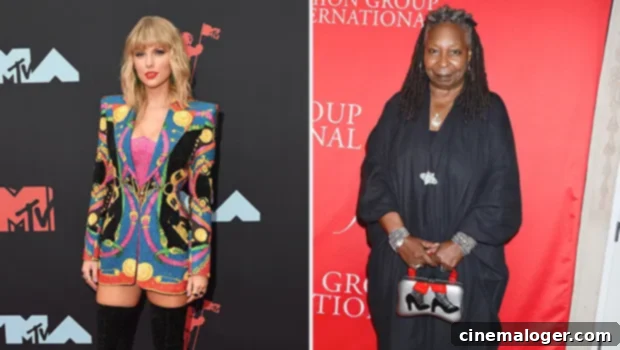
Whoopi Goldberg and The View Unpack Fox News’s Obsession with Taylor Swift’s Political Influence Ahead of the 2024 Election
In an increasingly polarized political landscape, the intersection of pop culture and national elections has become a significant talking point. Few figures embody this intersection more prominently than global pop superstar Taylor Swift. Her immense influence, particularly among younger demographics, has drawn the attention—and in some cases, the ire—of political commentators across the spectrum. Recently, this phenomenon took center stage on ABC’s long-running daytime talk show, The View, where moderator Whoopi Goldberg and her co-hosts critically dissected the conservative media’s focused and often alarmist coverage of Swift’s potential impact on the upcoming 2024 election.
Whoopi Goldberg did not mince words as she sharply criticized Fox News commentators for what she perceived as their disproportionately negative and fear-driven coverage of Taylor Swift during a “Hot Topics” segment onThe Viewon Tuesday, January 30. The seasoned moderator, 68, highlighted the apparent absurdity of conservative media anchors dedicating significant airtime to disparage Taylor, 34, seemingly out of a deep-seated apprehension that her ability to connect with and mobilize her vast fanbase could genuinely sway the outcome of a presidential election. Goldberg articulated a range of pressing issues that are genuinely concerning to a diverse electorate, including vital topics such as “reproductive rights, immigration reform, voting rights, and healthcare.” Following this enumeration of critical societal concerns, she adopted a distinctly sarcastic tone, directly mocking Fox News’s priorities as she introduced a revealing montage. “Conservative media is warning—they are warning how they’re taking action against a force they see as a major factor in the election 2024,” she stated, underscoring the perceived overreaction.
The subsequent montage presented a compilation of prominent Fox News personalities, including Laura Ingraham, 60, and Sean Hannity, 62. These clips showcased their commentary on Taylor Swift, which predominantly featured complaints and anxieties regarding her openly Democratic political views. The collection of segments painted a clear picture of a media network grappling with, and reacting strongly to, the pop star’s undeniable cultural and political footprint. After the montage concluded, Whoopi Goldberg posed a rhetorical question laden with incredulity: “Why is she triggering everybody? I mean, they are freaking out!” Her question encapsulated the sentiment that the conservative media’s intense focus on Swift was not just a news story, but a reaction bordering on panic.
RIGHT-WING MEDIA FLOATS TAYLOR SWIFT CONSPIRACY THEORIES: #TheView co-hosts weigh in on conservative media’s warning of how the pop superstar is a major factor in the 2024 election. https://t.co/cVclFZQmjA pic.twitter.com/ZE72JHwPpF
— The View (@TheView) January 30, 2024
The Power of the Swifties: A “Force of Nature” in Politics
Adding a unique perspective to the discussion was The View’s conservative host, Alyssa Farah Griffin, who proudly declared herself a “Swiftie.” Farah Griffin, drawing on her deep understanding of Swift’s fanbase and her own political background, eloquently articulated why the conservative media’s laser focus on the pop star was not only misguided but strategically unsound. Referencing the beloved “Lover” era of Swift’s career, Farah Griffin quipped, “They need to calm down is what they need to do.” She then delivered a potent warning, emphasizing the collective power of Swift’s fans: “I could not think of a dumber political fight to pick than one with the Swifties. We are a force of nature. We create earthquakes when we go to her shows.” This statement resonated deeply, acknowledging not just the cultural impact but also the very real, tangible mobilizational power of Taylor Swift’s fanbase, demonstrated by phenomena like seismic activity recorded during her Eras Tour concerts.
Alyssa Farah Griffin, 34, continued her analysis by providing crucial context regarding Taylor Swift’s political awakening and subsequent engagement. She highlighted that since Swift first publicly embraced her political beliefs in 2018, she has been unequivocally transparent about her stances and the candidates she supports. “Taylor Swift has long championed democratic causes, and it’s never personally offended me in any way,” Farah Griffin explained. She recounted specific instances, noting, “She came out in 2020 and said, ‘We need to beat Trump.’ She came out after the Dobbs decision. She hasn’t been quiet about her politics.” This historical overview underscored that Swift’s political leanings are not a new development but a consistent aspect of her public persona, making the conservative media’s sudden alarm seem disingenuous or poorly informed. Her consistent advocacy for issues like voter registration, LGBTQ+ rights, and women’s reproductive health has solidified her image as a politically engaged artist, resonating strongly with millions of fans who share similar values.
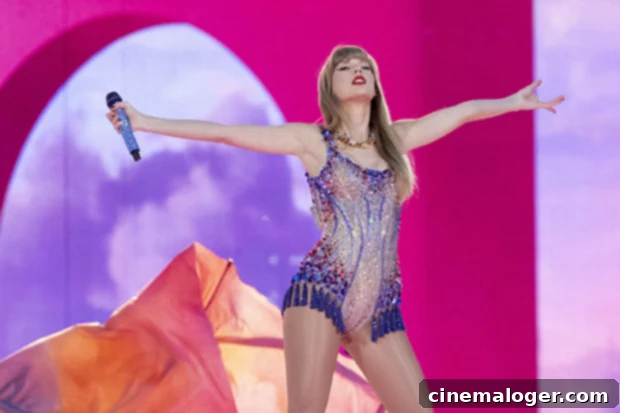
As a former White House Director of Strategic Communications, Alyssa Farah Griffin possessed a unique insight into the inner workings of political messaging and strategy. Leveraging this experience, she proceeded to explicitly call out Fox News for actively amplifying what she termed “straight-up conspiracy theories.” Her accusation was direct and severe: she contended that Fox News was deliberately “creating conspiracy theories about a popstar, because you can’t win an election.” This accusation suggests a tactical failure on the part of conservative media – rather than focusing on substantive policy debates or appealing to voters with a compelling platform, they resort to manufacturing narratives around a cultural icon, exposing a deeper insecurity about their own electoral prospects. The implication is clear: if a political party or movement feels compelled to demonize a pop star, it might be an admission of a lack of a strong, positive message that resonates with a broad base of voters, particularly younger ones.
Beyond Taylor Swift: The Larger Question of Engaging Young Voters
Whoopi Goldberg, who has consistently shown herself to be a supporter of Taylor Swift and her right to political expression, emphatically concurred with Farah Griffin’s assessment. She then pivoted the conversation towards a more profound and serious political inquiry, one that cut to the core of the conservative movement’s challenges with key demographics. “They have no platform,” the distinguished EGOT winner declared, referring to the conservative opposition. She continued, addressing her rhetorical question directly to that political side: “What are you doing? I’m going to ask that side. What are you doing for younger voters? We know why young people are upset, but what are you going to do? Y’all are making so much stink about Taylor Swift, because you don’t know what to do.”
Goldberg’s powerful statement highlighted a critical deficiency: the perceived absence of a coherent and appealing political platform designed to address the genuine concerns of younger voters. Instead of engaging with pressing issues that resonate deeply with this demographic—such as climate change, student loan debt, affordable healthcare, and civil rights—the focus had seemingly shifted to a manufactured controversy surrounding a popular celebrity. This strategy, Goldberg argued, reveals a fundamental misunderstanding or an outright avoidance of the issues that genuinely motivate and mobilize young people to participate in the democratic process. It implies that rather than offering solutions, some conservative outlets opt to sow discord around figures who represent the very demographic they struggle to attract.
The Interplay of Pop Culture, Politics, and Media Strategy
The entire discussion on The View underscores a fascinating and increasingly relevant dynamic in contemporary politics: the symbiotic yet often contentious relationship between pop culture, political influence, and media strategy. Taylor Swift, with her unprecedented global reach and deeply loyal fanbase, represents a potent force capable of mobilizing millions. Her public endorsements or calls to action, even if simply encouraging voter registration, carry significant weight. For conservative media outlets, this power presents a challenge. Historically, pop culture figures leaning left have often been dismissed, but Swift’s unparalleled popularity makes such dismissals increasingly difficult and potentially counterproductive.
The decision by Fox News and other conservative commentators to focus so heavily on Swift’s political leanings, to the point of alleging conspiracy theories, can be interpreted in several ways. Firstly, it could be a genuine expression of concern about her ability to influence the 2024 election, particularly given the tight margins in many swing states. A mobilized youth vote could indeed tilt the balance. Secondly, it could be a deliberate strategy to discredit her, or anyone else, who might encourage engagement with causes that do not align with their political agenda. By painting Swift as a tool of a larger political machine, they might aim to diminish her credibility among those who might otherwise be swayed by her message.
However, as Alyssa Farah Griffin astutely pointed out, this strategy risks alienating an enormous and highly engaged demographic. The “Swifties” are not merely passive consumers of music; they are an active, passionate community. Attacking their idol, particularly on grounds that seem to lack substantive evidence, could backfire dramatically, solidifying their opposition rather than convincing them. This phenomenon is not unique to Taylor Swift; historically, attempts to “cancel” or delegitimize popular figures for their political views often face fierce resistance from their dedicated followers. In an age where cultural identity increasingly intertwines with political identity, attacking a beloved cultural icon can feel like a direct attack on one’s own values and community.
Whoopi Goldberg’s concluding remarks serve as a poignant reminder of what might be lost in this political theater. By focusing on a celebrity and generating conspiracy theories, the conservative media might be missing a crucial opportunity to genuinely engage with the younger electorate on issues that truly matter to them. The youth vote is a powerful, often underestimated, demographic. Their concerns about the future—economic stability, environmental sustainability, social justice—are real and demand serious attention from all political parties. Ignoring these substantive issues in favor of superficial attacks on cultural figures could prove to be a significant misstep in the long run, alienating a generation of voters whose political allegiances are still forming.
Ultimately, the discussion on The View regarding Taylor Swift and Fox News’s reaction to her political influence highlights the evolving complexities of modern political campaigning. It’s a landscape where celebrity endorsements are not just fleeting news items but potentially potent forces that can shape electoral outcomes. It also serves as a critical mirror, reflecting how different media entities choose to engage with, or disengage from, the pressing concerns of a diverse and dynamic electorate, particularly as the highly anticipated 2024 election draws nearer.